
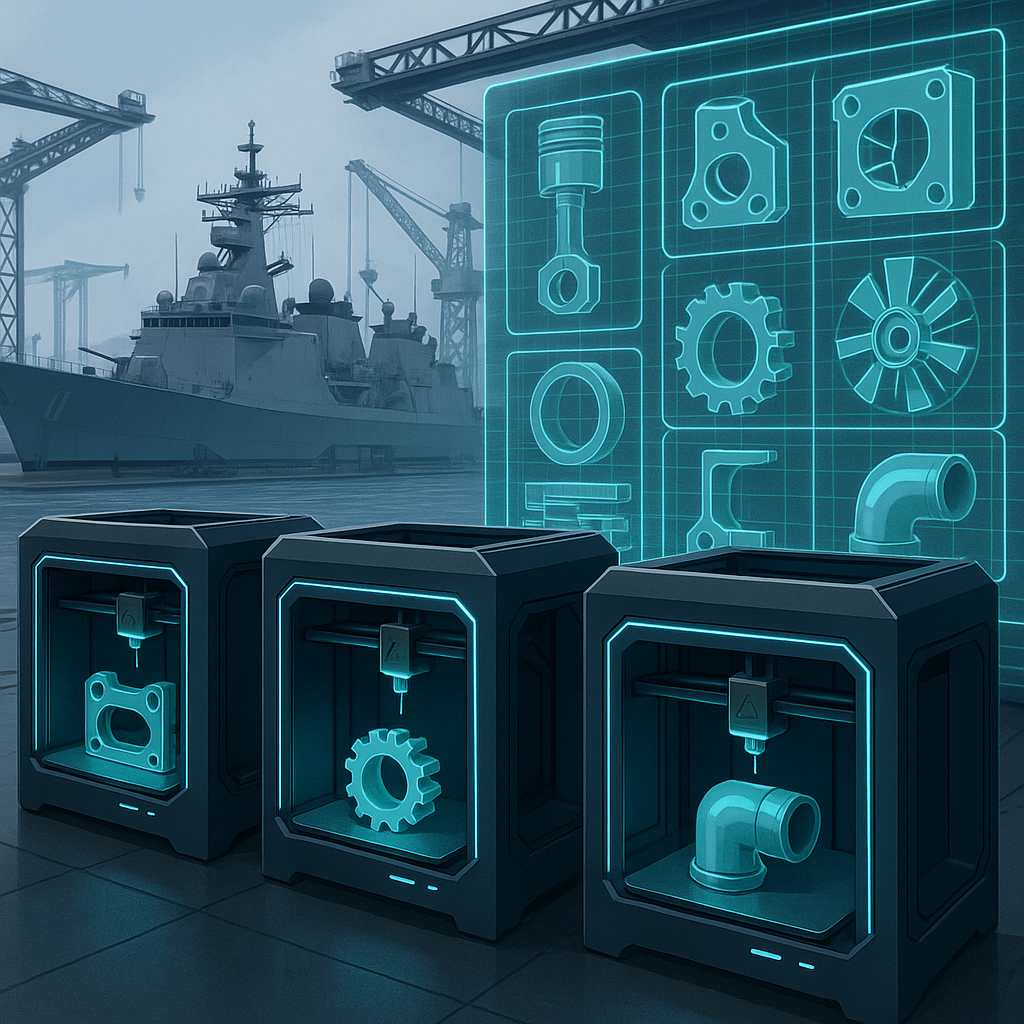
In a significant development for digital inventory and on-demand manufacturing, the U.S. Navy has harnessed 3D printing technology to cut production times by 70%. This breakthrough underscores the transformative potential of distributed manufacturing models, where digital inventory and localized production converge to dramatically enhance supply chain responsiveness and operational readiness.
What Happened
The Navy implemented advanced 3D printing techniques to accelerate the manufacture of critical components, reducing traditional production timelines by nearly three-quarters. While specific parts or systems benefiting from this acceleration have not been detailed publicly, the reported 70% reduction in production time highlights a successful integration of additive manufacturing into military logistics and maintenance workflows.
Why It Matters
This development is a pivotal example of how distributed manufacturing—enabled by digital inventory—can revolutionize supply chains in high-stakes environments. The Navy’s ability to produce parts on demand, closer to the point of use, reduces dependency on centralized warehouses and long lead times. This agility is crucial for military operations that require rapid equipment turnaround and resilience against supply disruptions.
More broadly, the Navy’s success story serves as a bellwether for other industries where just-in-time production and inventory digitization can unlock efficiency gains, cost savings, and enhanced customization. It also validates 3D printing as a mature and operationally viable technology beyond prototyping, moving firmly into production roles.
Technical Context
3D printing, or additive manufacturing, builds parts layer by layer from digital models, enabling complex geometries and rapid iteration without the tooling constraints of traditional manufacturing. The Navy’s reported 70% time reduction likely stems from eliminating tooling lead times, reducing assembly steps, and streamlining supply chains through digital part files instead of physical inventory.
Distributed manufacturing leverages this technology by storing digital inventories—repositories of validated 3D printable designs—accessible globally. When a part is needed, it can be printed on-site or nearby, bypassing conventional shipping delays. This approach also allows for rapid design updates and customization, critical in military contexts where operational requirements can evolve quickly.
However, challenges remain in material certification, print quality consistency, and integration with existing maintenance procedures. The Navy’s achievement suggests progress in overcoming these hurdles, though detailed technical data on the specific printers, materials, and validation processes used is not publicly available.
Near-Term Prediction Model
Given the Navy’s success, it is reasonable to predict accelerated adoption of distributed manufacturing models across defense and adjacent sectors over the next 12 to 24 months. The maturity of 3D printing technologies for production use, combined with growing digital inventory frameworks, will drive this transition.
Key factors influencing this trajectory include further validation of print reliability, expansion of certified materials, and development of secure digital inventory management systems. As these elements mature, organizations will increasingly rely on on-demand manufacturing to reduce inventory costs and improve supply chain resilience.
What to Watch
- Expansion of digital inventory platforms: The development and adoption of secure, standardized digital part libraries will be critical for scaling distributed manufacturing.
- Material and process certification: Advances in certifying 3D printed materials for critical applications will determine the scope of parts suitable for on-demand production.
- Integration with logistics and maintenance workflows: How organizations incorporate 3D printing into existing supply chains and repair protocols will influence operational impact.
- Cybersecurity of digital inventories: Protecting digital assets from tampering or theft is essential as manufacturing decentralizes.
- Cross-industry adoption: Monitoring how commercial sectors, such as aerospace, automotive, and healthcare, leverage similar strategies will offer insights into broader market trends.
In conclusion, the Navy’s 70% production time reduction through 3D printing exemplifies the powerful synergy between digital inventory and distributed manufacturing. While some technical specifics remain undisclosed, the strategic implications are clear: on-demand manufacturing enabled by digital inventories is poised to reshape supply chains, improve responsiveness, and drive innovation across industries.