
What Happened
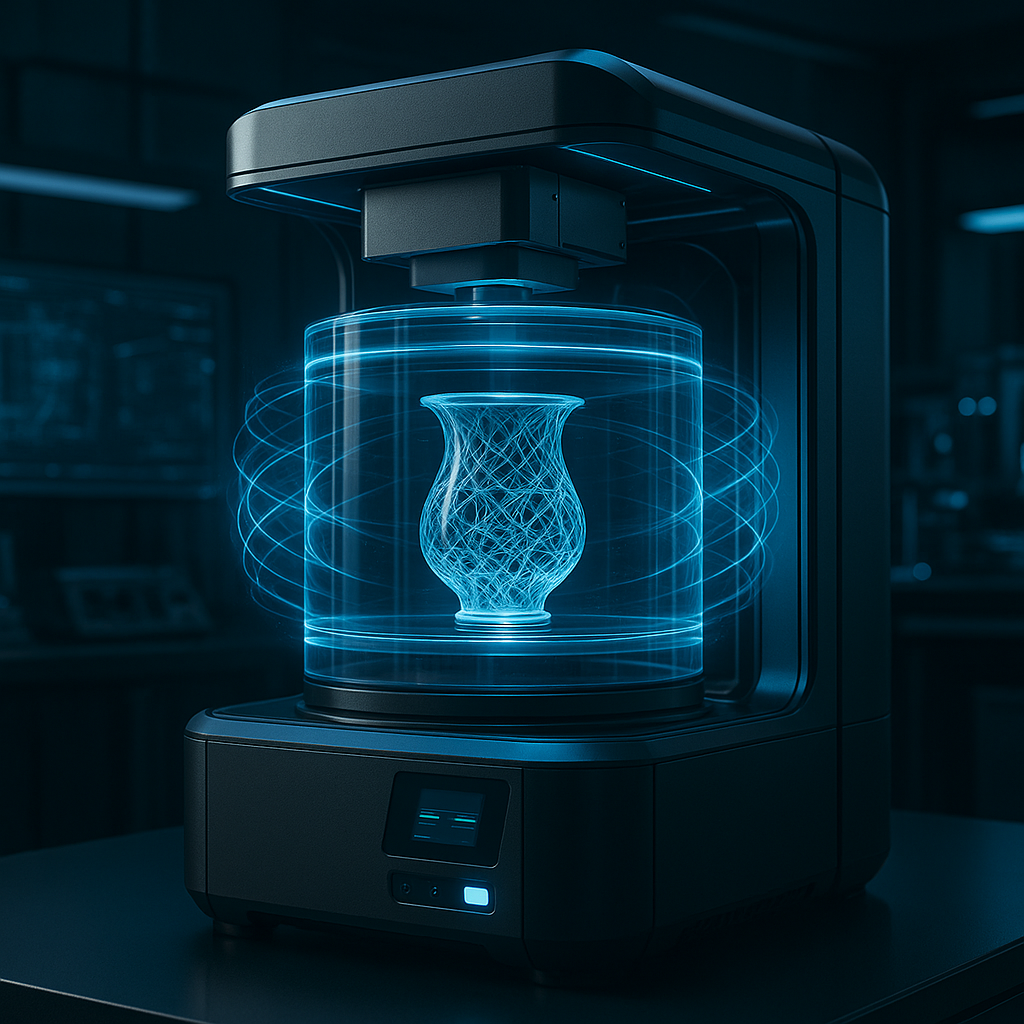
Scientists have recently developed a groundbreaking method for 3D printing glass parts with thicknesses comparable to a human hair. This rapid fabrication technique, highlighted in a 3D Printing Industry article, leverages volumetric printing techniques, notably computed axial lithography (CAL), to produce glass components with unprecedented speed and precision.
Why It Matters
Glass is a notoriously challenging material for additive manufacturing due to its brittleness, high melting point, and optical properties. Traditional 3D printing methods for glass often involve slow, layer-by-layer deposition or sintering, limiting throughput and resolution. The new volumetric approach enables rapid, layerless fabrication, significantly reducing production time while achieving ultra-thin geometries that were previously difficult or impossible to realize. This advancement opens doors for applications in optics, microfluidics, electronics, and biomedical devices where fine glass structures are essential.
Technical Context
Volumetric printing, unlike conventional layer-based 3D printing, creates entire 3D volumes simultaneously by projecting light patterns into a photosensitive resin or material precursor. Computed axial lithography (CAL) is a volumetric technique inspired by medical computed tomography (CT) scans, where multiple 2D light projections are computationally optimized and projected around a rotating volume. The cumulative light exposure polymerizes the resin in a 3D shape all at once, eliminating layering artifacts and drastically speeding up production.
In the context of glass printing, this method requires a photosensitive glass precursor or sol-gel material that can be solidified and subsequently heat-treated to form transparent glass. The scientists’ breakthrough lies in adapting CAL to these glass precursors, enabling them to print parts with thicknesses on the scale of a hair’s diameter. The article does not specify the exact chemical formulations or the post-processing protocols, which remain critical unknowns for assessing scalability and mechanical properties.
Near-term Prediction Model
Currently, volumetric glass printing using CAL remains in the research and development phase. The complexity of material chemistry, combined with the need for precise thermal treatment to achieve optical clarity and mechanical strength, suggests a 12 to 24-month horizon before pilot-scale demonstrations emerge. The impact potential is high, especially for industries requiring rapid prototyping of intricate glass components. However, challenges in material stability, resolution limits, and integration with existing manufacturing workflows temper expectations.
What to Watch
- Advances in photosensitive glass precursor formulations that improve print fidelity and post-processing outcomes.
- Development of commercial CAL printers optimized for glass materials, including hardware capable of precise multi-angle light projection and rotation.
- Demonstrations of functional glass parts in optics, microfluidics, or electronics that validate the technology’s practical utility.
- Collaborations between academia, startups, and established glass manufacturers to accelerate commercialization.
- Regulatory and quality control frameworks for additive manufacturing of glass, especially for biomedical and optical applications.
In summary, the integration of computed axial lithography into glass 3D printing represents a promising frontier in volumetric additive manufacturing. While still nascent, this approach could redefine how complex glass components are fabricated, unlocking new design possibilities and accelerating innovation across multiple high-tech sectors.