
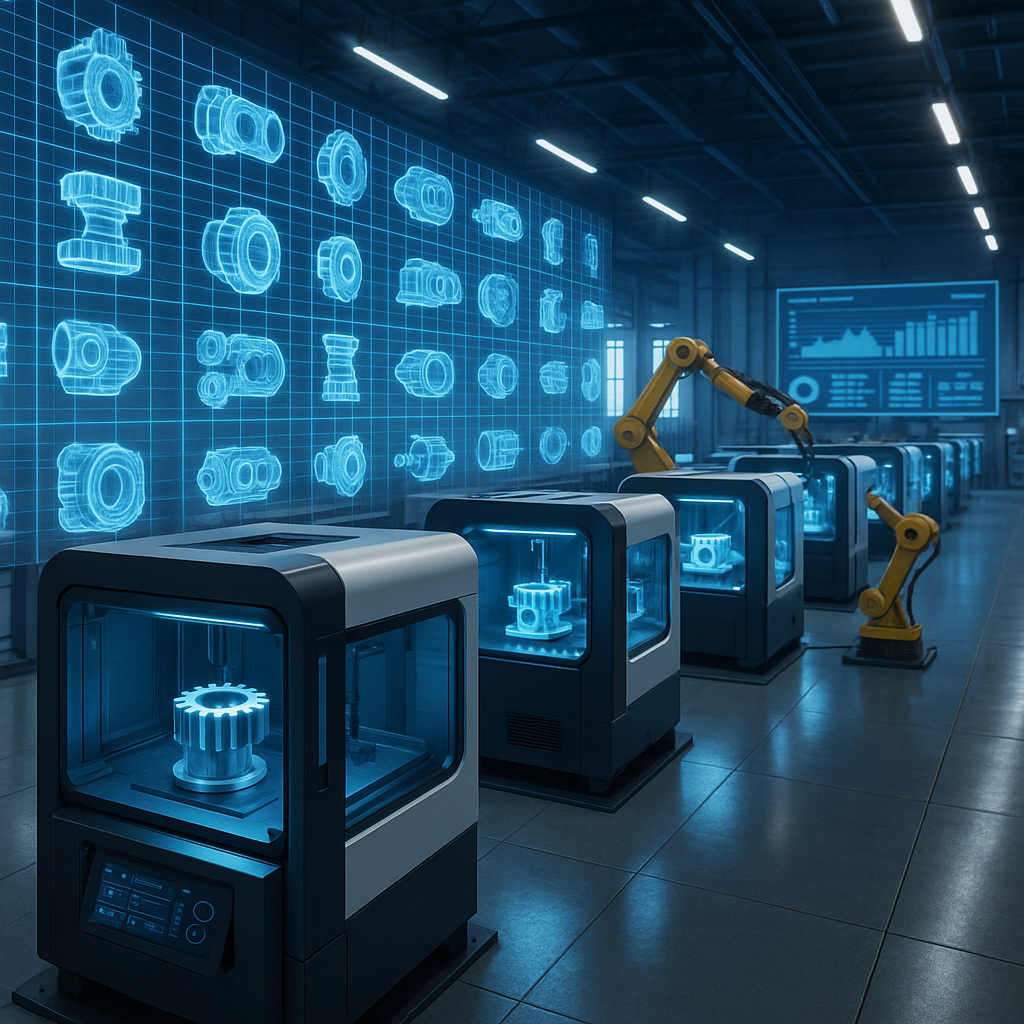
In a significant development for digital inventory and on-demand manufacturing, Siemens has introduced a process for producing 3D-printed parts directly within factory settings, as reported by Siemens news. This innovation marks a pivotal step toward integrating digital warehouses within manufacturing environments, enabling on-demand part production that could drastically reduce inventory overhead and supply chain delays.
What Happened
Siemens has demonstrated the capability to produce 3D-printed parts directly on the factory floor rather than relying on traditional inventory stockpiling or external suppliers. While specific technical details and the range of parts printable in this manner remain undisclosed, the announcement highlights a strategic push to embed additive manufacturing into core production workflows. This shift enables factories to maintain a digital warehouse—a virtual inventory of parts that can be printed as needed—thus streamlining operations and enhancing responsiveness.
Why It Matters
This development is crucial because it addresses long-standing challenges in supply chain management and inventory costs. Traditional warehouses require significant capital investment, space, and labor for storage and logistics. By contrast, a digital warehouse model supported by in-factory 3D printing allows manufacturers to minimize physical inventory, reduce lead times, and respond rapidly to changing demand or supply disruptions. Moreover, it supports greater customization and flexibility, which are increasingly demanded in modern manufacturing environments.
Technical Context
3D printing, or additive manufacturing, has been steadily advancing in terms of materials, speed, and precision. Siemens’ approach likely leverages industrial-grade printers capable of producing functional parts with the necessary mechanical properties for integration into finished products. The integration of digital inventory systems with manufacturing execution systems (MES) and enterprise resource planning (ERP) software is also critical, enabling seamless ordering, production scheduling, and quality control. However, the exact printer models, materials used, and software stack Siemens employs have not been publicly detailed, leaving some technical specifics unknown.
Near-Term Prediction Model
In the next 12 to 24 months, Siemens and other industrial players are expected to pilot and gradually commercialize factory-integrated 3D printing solutions. Early adopters will likely focus on low-volume, high-complexity parts where traditional manufacturing and inventory are cost-prohibitive. The impact score for this technology is high—around 75 out of 100—due to its potential to transform supply chains, but confidence remains moderate at 65 because of remaining technical and operational challenges such as print speed, part certification, and workforce training.
What to Watch
- Expansion of Siemens’ 3D printing capabilities to a broader range of materials and part types.
- Integration progress with digital warehouse management and ERP systems for real-time inventory control.
- Case studies demonstrating cost savings, lead time reductions, and quality assurance improvements.
- Regulatory developments concerning additive manufacturing parts in critical industries like aerospace and automotive.
- Competitive responses from other manufacturing technology providers and potential partnerships.
Overall, Siemens’ move to embed 3D printing within factory operations signals a transformative shift toward digital warehouses and on-demand manufacturing. While some technical and implementation details remain to be revealed, this initiative positions Siemens at the forefront of a manufacturing revolution that promises more agile, cost-effective, and resilient supply chains.