
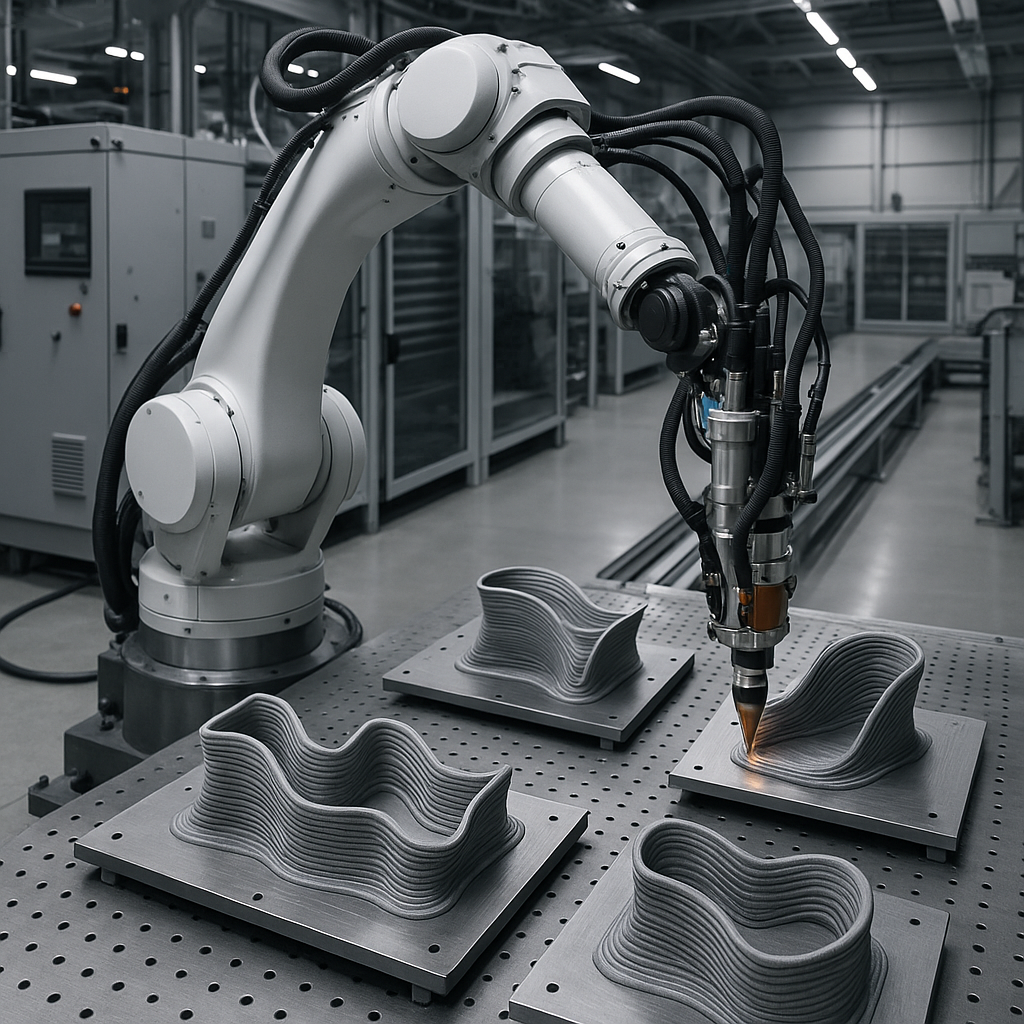
Recent developments in multi-plate automation in 3D printing are providing fresh momentum to the frontier of robotic arm 3D printing, particularly within the realms of non-planar and multi-axis additive manufacturing. This article synthesizes the implications of these advances, drawing from the recent Techloy report dated February 5, 2026, to frame a comprehensive understanding of the technology’s trajectory and its potential impact on industrial and creative sectors.
What Happened
Techloy’s coverage highlights the evolution of multi-plate automation systems that enable robotic arms to seamlessly switch between multiple build plates during a single manufacturing cycle. This development addresses a critical bottleneck in large-scale and complex 3D printing operations, where downtime for plate changes or manual intervention has traditionally limited throughput and flexibility. While the article does not provide exhaustive technical specifications, it underscores that these automated multi-plate setups are increasingly integrated with multi-axis robotic arms capable of non-planar printing strategies.
Why It Matters
The integration of multi-plate automation with robotic arm 3D printing systems marks a significant leap toward industrializing non-planar and multi-axis additive manufacturing. Non-planar printing allows layers to be deposited along curved or angled surfaces rather than flat planes, improving mechanical properties and surface finish. Multi-axis robotic arms add further degrees of freedom, enabling complex geometries that are impossible or inefficient with traditional gantry-style printers.
By automating the handling of multiple build plates, manufacturers can dramatically increase operational efficiency, reduce human error, and enable continuous production cycles. This is especially valuable for sectors such as aerospace, automotive, and customized medical devices, where low-volume, high-complexity parts are prevalent. Moreover, the ability to print on multiple plates without manual intervention supports more experimental workflows and rapid iteration, accelerating innovation.
Technical Context
Robotic arm 3D printing diverges from traditional planar FDM or SLA printers by offering six or more axes of movement, allowing deposition paths that conform to complex 3D surfaces. This capability supports non-planar printing techniques, which have been shown to enhance layer adhesion and reduce anisotropy in printed parts. However, these systems historically faced challenges related to throughput and workflow management.
Multi-plate automation systems integrate hardware and software solutions to queue, load, and unload build plates automatically. This requires precise alignment systems, robust plate handling mechanisms, and synchronized control software capable of coordinating the robotic arm’s movements with plate changes. While the Techloy article does not detail these mechanisms, the trend indicates growing maturity in these integrated systems, likely leveraging advances in machine vision, robotics, and industrial automation.
Near-Term Prediction Model
Within the next 12 to 24 months, multi-plate automation combined with robotic arm 3D printing is expected to transition from pilot deployments to early commercial adoption, particularly in specialized manufacturing environments. Early adopters will likely be industries requiring complex, high-value parts with low to medium production volumes.
Key factors influencing this timeline include the refinement of automation reliability, integration with existing manufacturing execution systems (MES), and cost reductions in robotic hardware. Software development to optimize toolpath planning for multi-plate, multi-axis workflows will also be critical.
What to Watch
- Advances in toolpath generation software: Improvements that enable efficient non-planar, multi-axis printing across multiple plates will be a major enabler.
- Integration with industrial automation: How well these systems interface with broader factory automation and quality control processes.
- Material compatibility: Expansion of printable materials that can leverage non-planar deposition for enhanced properties.
- Case studies from early adopters: Real-world performance data and ROI analyses from industries such as aerospace and healthcare.
- Standardization efforts: Development of standards for multi-plate robotic arm printing workflows to facilitate wider adoption.
While the Techloy article provides a valuable snapshot of the state of multi-plate automation in 3D printing, many technical and commercial details remain to be fully disclosed by manufacturers and users. Continued monitoring of pilot projects and emerging commercial systems will help clarify the practical benefits and limitations of these innovations.