
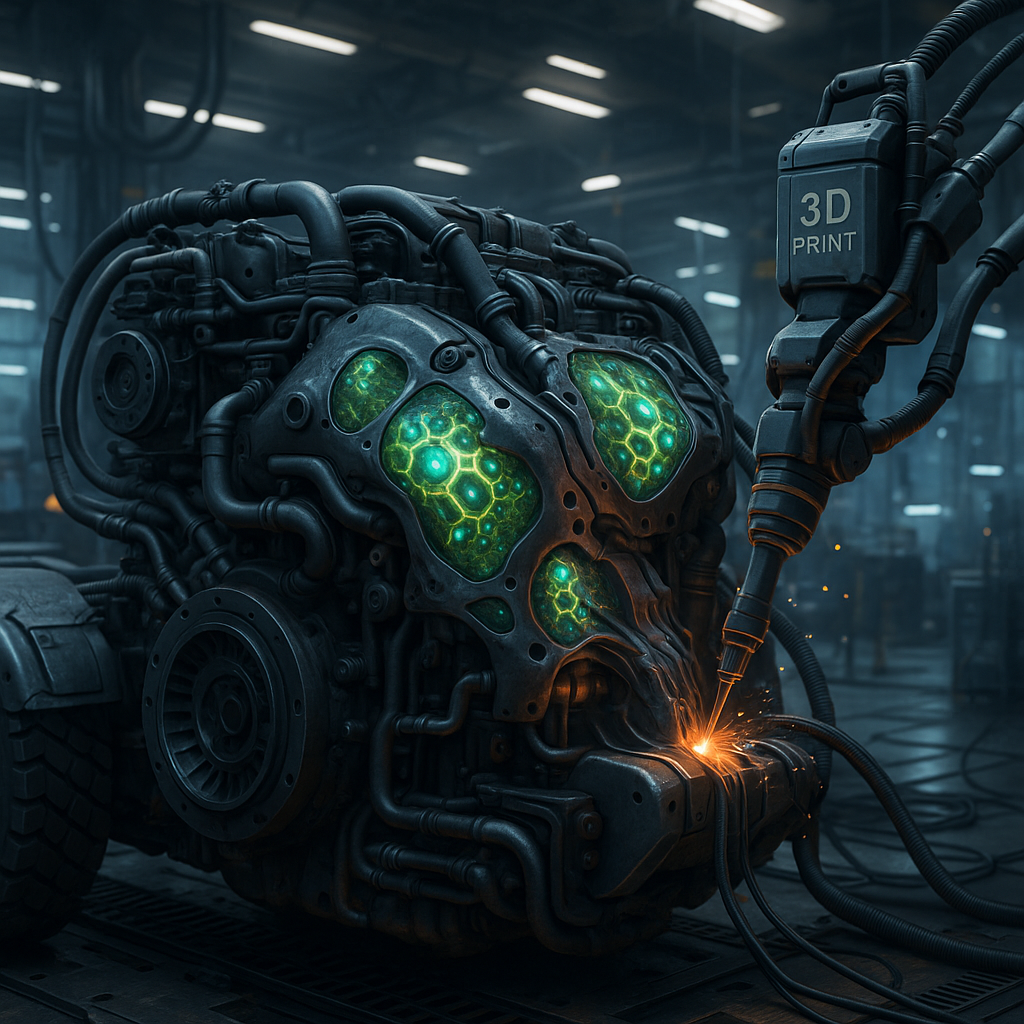
In a recent article by Heavy Duty Trucking, the transformative power of 3D printing in breathing new life into old truck parts was highlighted, marking a significant industrial shift. This development is not merely about extending the service life of heavy machinery components but also signals a broader technological evolution, especially when viewed through the lens of smart and bio-embedded materials, including the emerging frontier of living materials.
What Happened
The trucking industry is increasingly adopting 3D printing to repair and reproduce parts that are otherwise obsolete or prohibitively expensive to replace. This application of additive manufacturing enables the restoration of heavy-duty truck components, effectively reducing waste and downtime. Although the original article focuses on practical industrial applications, it opens the door to considering how smart materials, particularly living materials, could further revolutionize this space.
Why It Matters
Heavy-duty trucks are critical infrastructure for global logistics, and their maintenance costs have a direct impact on operational efficiency and sustainability. Traditional manufacturing for replacement parts often involves long lead times and significant material waste. 3D printing disrupts this model by enabling on-demand production and customization. When combined with smart and bio-embedded materials, this could lead to parts that self-monitor, self-repair, or adapt to environmental conditions, drastically reducing maintenance costs and extending component lifespans.
Technical Context
3D printing in industrial repair primarily uses metals and high-strength polymers. Current challenges include ensuring printed parts meet strict mechanical and safety standards. The integration of smart materials—like shape-memory alloys or polymers—and bio-embedded materials such as living cells or bacteria engineered to respond to stress or damage, remains largely experimental but promising.
Living materials represent a cutting-edge category where biological components are embedded within or grown alongside synthetic structures. For truck parts, this could mean embedding microbial systems that detect microfractures and initiate biochemical repair processes or materials that dynamically adjust their properties based on load or temperature. Although not yet commercialized in heavy-duty applications, research in this area is accelerating.
Near-term Prediction Model
Over the next 24 to 36 months, the heavy trucking sector will likely continue expanding its use of 3D printed replacement parts, focusing on improving material strength and certification processes. Meanwhile, pilot projects involving smart materials with embedded sensors for real-time condition monitoring may emerge. However, the adoption of living materials in this sector will remain in the R&D or pilot stage due to regulatory, durability, and integration challenges.
Key factors influencing this timeline include advancements in biofabrication techniques, regulatory approvals for bio-embedded components in safety-critical applications, and cost reductions in additive manufacturing technologies.
What to Watch
- Advances in biofabrication: Breakthroughs in embedding living cells or microbes into durable materials suitable for heavy-duty environments.
- Regulatory frameworks: Emerging standards for certifying bio-embedded and smart materials in industrial applications.
- Industry partnerships: Collaborations between biotech firms, 3D printing companies, and heavy truck manufacturers aiming to pilot living material applications.
- Sensor integration: Development of embedded sensor networks within printed parts for predictive maintenance.
- Material longevity studies: Research assessing the durability and lifecycle of bio-embedded materials under heavy mechanical stress.
While the current use of 3D printing in heavy truck maintenance is a significant leap forward, the integration of living materials could redefine the future of smart manufacturing, offering self-healing, adaptive, and environmentally responsive components. This frontier remains under-covered but holds transformative potential for industrial sustainability and efficiency.