
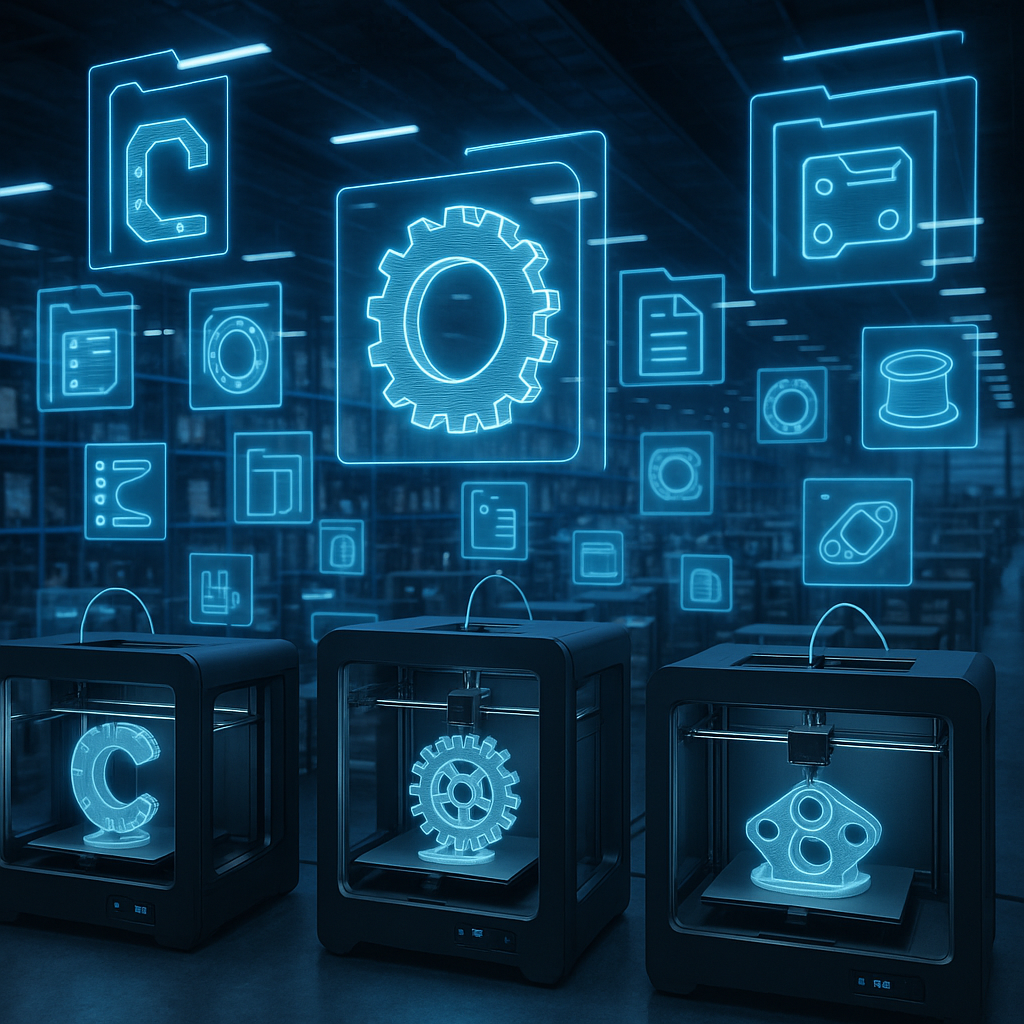
As the 3D printing industry continues to evolve, the concept of digital inventory 3D printing is gaining traction as a transformative approach to supply chain management and on-demand manufacturing. The recent 3D Printing / Additive Manufacturing Conferences, Expos & Events 2026 showcased the growing industry focus on leveraging digital inventory to enable rapid, localized production without the need for traditional physical stockpiles.
What Happened
Throughout 2026, key industry conferences and expos have highlighted digital inventory 3D printing as a pivotal theme. Leading additive manufacturing companies and innovators presented advancements in digital warehousing, secure file management, and distributed manufacturing networks. These events have underscored a shift from conventional inventory models to a digital-first approach where product designs and manufacturing instructions are stored digitally and printed on-demand near the point of use.
While specific breakthroughs in hardware or software were not exhaustively detailed in the available event summaries, the collective emphasis on digital inventory reflects a maturing ecosystem where supply chains can become more resilient and responsive. This shift is particularly relevant in sectors such as aerospace, automotive, and medical devices where part availability and customization are critical.
Why It Matters
The significance of digital inventory 3D printing lies in its potential to revolutionize how companies manage inventory and respond to market demands. Traditional inventory methods involve holding large physical stockpiles, which ties up capital and risks obsolescence. Digital inventory replaces physical stock with digital files that can be transmitted globally and printed locally, dramatically reducing storage costs and lead times.
Moreover, this approach enhances supply chain agility by enabling manufacturers to produce parts on-demand, customize products more easily, and reduce waste associated with overproduction. It also mitigates risks related to global disruptions—such as pandemics, trade conflicts, or natural disasters—by decentralizing production capabilities.
Technical Context
Digital inventory 3D printing relies on a combination of advanced additive manufacturing technologies, secure digital file management systems, and integrated supply chain software. The core components include:
- High-fidelity 3D printing technologies: Capable of producing parts with consistent quality across distributed locations.
- Digital Rights Management (DRM) and cybersecurity: Protecting intellectual property embedded in digital inventory files.
- Cloud-based platforms: Enabling seamless access, version control, and distribution of digital part files.
- Quality assurance protocols: Ensuring printed parts meet regulatory and safety standards regardless of print location.
Current challenges involve standardizing file formats, certification processes for printed parts, and establishing trust frameworks between original equipment manufacturers (OEMs) and distributed print providers.
Near-term Prediction Model
In the next 12 to 24 months, digital inventory 3D printing is expected to transition from pilot projects toward broader commercial adoption. Early adopters in aerospace and healthcare will demonstrate scalable use cases, particularly for low-volume, high-value parts. Investment in secure, interoperable digital inventory platforms will accelerate, driven by the need for supply chain resilience.
However, widespread adoption will require overcoming hurdles such as regulatory acceptance, intellectual property protection, and integration with existing enterprise resource planning (ERP) systems. Progress in these areas will dictate the pace at which digital inventory models become mainstream.
What to Watch
- Emerging standards and certifications: Development of industry-wide protocols for digital inventory management and part quality validation.
- Advances in secure file transmission: Innovations in DRM and blockchain technologies to safeguard digital assets.
- Expansion of distributed manufacturing networks: Partnerships between OEMs and local print hubs enabling rapid on-demand production.
- Regulatory frameworks: Government policies facilitating or hindering digital inventory adoption, especially in regulated sectors.
- Integration with AI and predictive analytics: Using data to optimize inventory digitization and anticipate production needs.
While many details about the specific technological advancements presented at the 2026 events remain undisclosed, the overall momentum signals that digital inventory 3D printing is poised to become a cornerstone of modern manufacturing strategies.