
What Happened
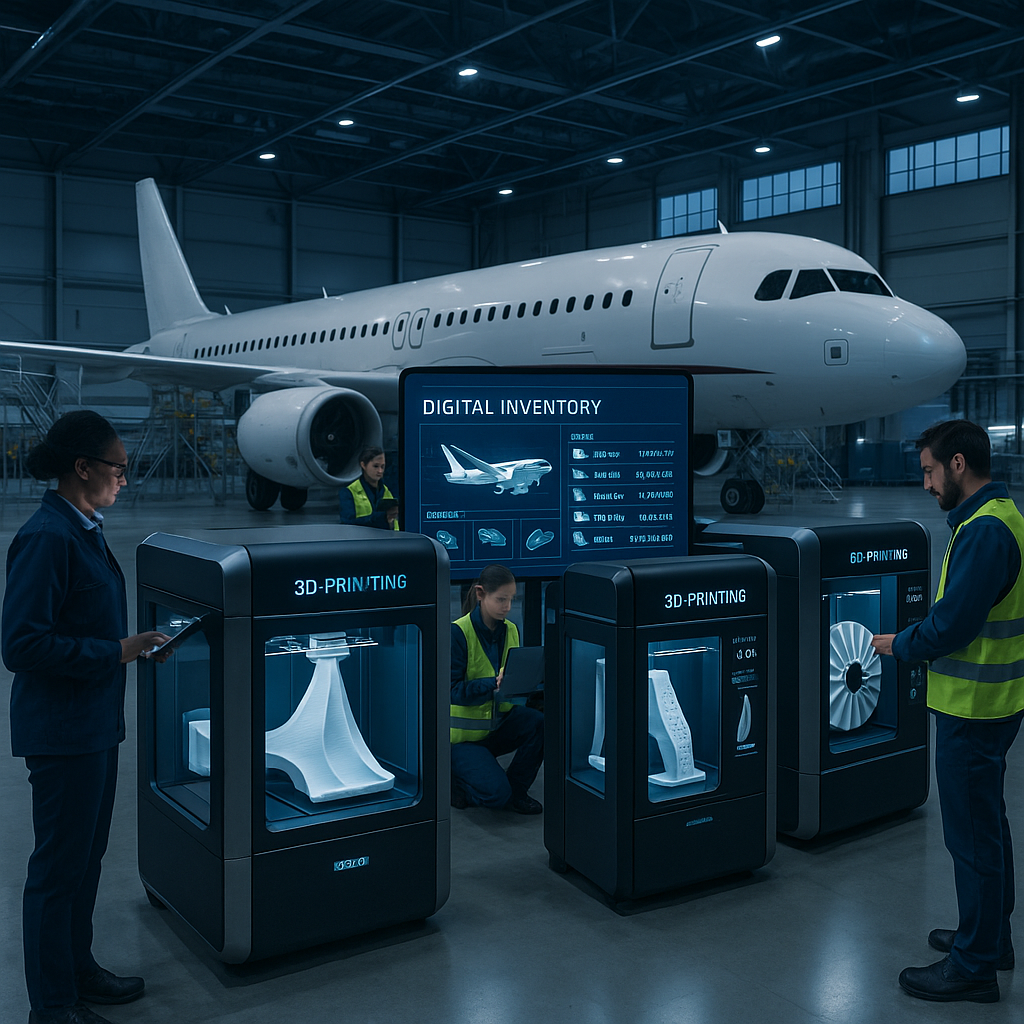
Northrop Grumman recently showcased significant advancements in advanced manufacturing technology by integrating 3D printing for airplane parts production. According to a Northrop Grumman source article, the company has been leveraging additive manufacturing to produce critical airplane components, enabling a shift towards on-demand spare parts production.
Why It Matters
The aerospace sector has traditionally grappled with the challenges of maintaining extensive physical inventories of spare parts to ensure aircraft readiness and safety. These inventories are costly to store and manage, often leading to inefficiencies and long lead times for part replacement. Northrop Grumman’s deployment of 3D printing technology for on-demand spares represents a paradigm shift in digital inventory management, significantly reducing the need for large warehouses and enabling rapid, localized production of parts as needed.
This innovation not only cuts costs but also enhances operational agility and sustainability by minimizing waste and transportation emissions associated with traditional supply chains. In critical industries like aerospace, where downtime can be extraordinarily expensive, the ability to produce parts quickly on-site or nearby can dramatically improve maintenance turnaround times and fleet availability.
Technical Context
Northrop Grumman’s approach relies on advanced additive manufacturing techniques capable of producing aerospace-grade components that meet stringent safety and performance standards. While the article does not specify the exact 3D printing technologies in use, typical methods in aerospace include selective laser melting (SLM) and electron beam melting (EBM) for metal parts, as well as high-performance polymers for non-structural components.
Critical to this process is the digital inventory system that stores certified digital part files, enabling secure, on-demand printing without physical stockpiles. This requires robust digital rights management, quality assurance protocols, and integration with aircraft maintenance systems. The ability to print parts with complex geometries and optimized materials also allows for design improvements that can enhance part performance and longevity.
Near-term Prediction Model
Given the current state of additive manufacturing in aerospace and Northrop Grumman’s ongoing developments, the technology is transitioning from pilot implementations to early commercial adoption within the next 12 to 24 months. The maturity stage can be classified as Pilot moving towards Commercial, with a high confidence level due to regulatory approvals and demonstrated successful part certifications in recent years.
The impact score is estimated at 75 out of 100, reflecting significant disruption potential in inventory management and maintenance operations, though widespread adoption will depend on further cost reductions and supply chain integration. Key risks include regulatory hurdles, material qualification challenges, and cybersecurity concerns related to digital inventory management.
What to Watch
- Regulatory developments from aviation authorities regarding certification and approval of 3D printed parts.
- Expansion of digital inventory platforms and secure distribution of digital part files.
- Advancements in additive manufacturing materials and processes that improve part performance and reduce costs.
- Partnerships between aerospace OEMs and additive manufacturing service providers to scale on-demand spares production.
- Implementation of cybersecurity measures to protect digital inventories from tampering or unauthorized access.
While Northrop Grumman’s announcement highlights promising progress, details on the specific parts printed, production volumes, and operational deployment remain limited. Continued monitoring of their programs and industry-wide adoption will clarify the full impact of on-demand 3D printed spares in aerospace and beyond.