
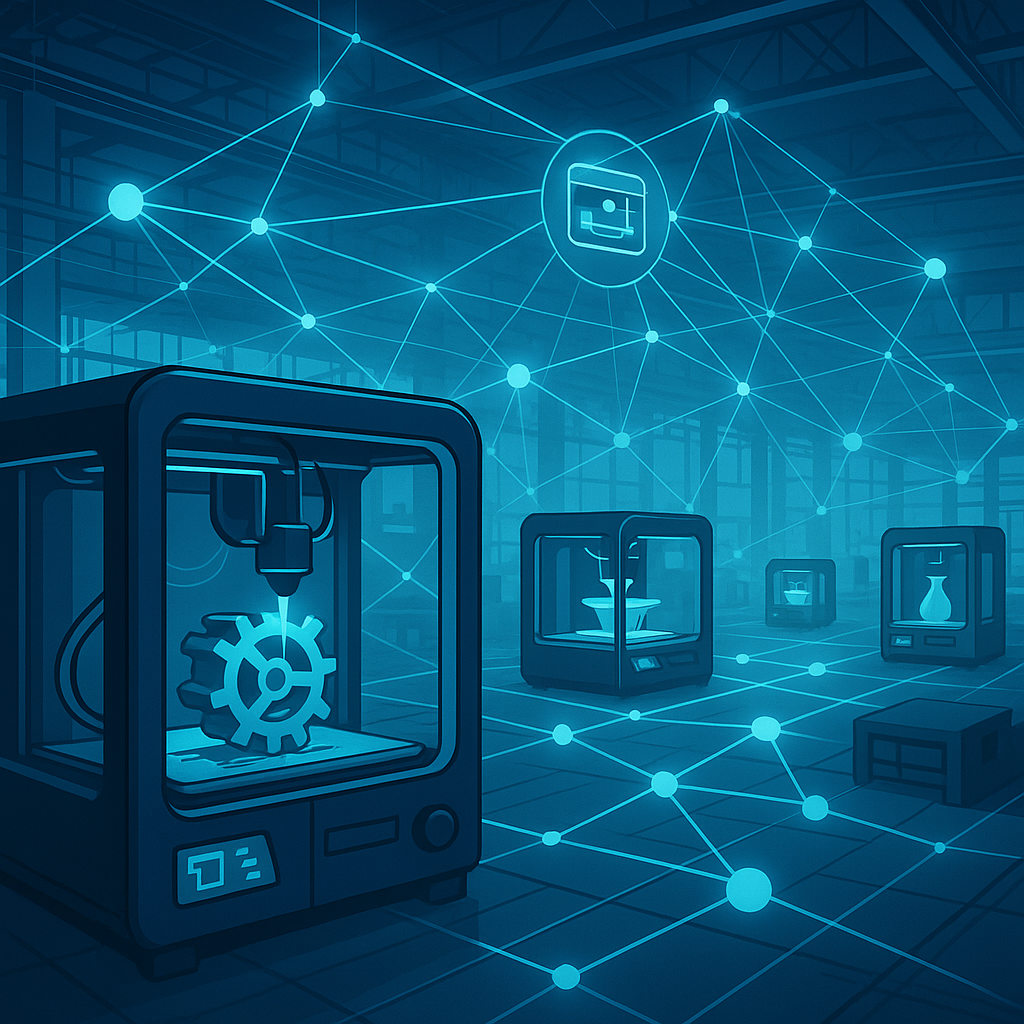
According to a recent article by The Augusta Chronicle, top 3D printing service suppliers are driving innovation in global manufacturing through distributed manufacturing models. This shift is transforming how companies manage digital inventory and fulfill on-demand production needs, signaling a new era in manufacturing agility and supply chain resilience.
What Happened
The article highlights the rise of distributed manufacturing as a key strategy among leading 3D printing service providers. By decentralizing production capabilities across multiple locations, these suppliers are enabling faster response times and localized manufacturing. This approach leverages digital inventory—virtual repositories of 3D printable designs—that can be accessed and printed on-demand at various geographically dispersed facilities.
While specific companies and technologies are not detailed in the source, the trend underscores a growing industry focus on integrating digital inventory systems with distributed additive manufacturing networks to reduce lead times and inventory costs.
Why It Matters
Distributed manufacturing combined with digital inventory management addresses critical challenges in traditional supply chains. Conventional inventory systems require physical stockpiles that tie up capital and risk obsolescence. In contrast, digital inventory allows companies to store product designs virtually and produce parts only as needed, reducing waste and storage costs.
Moreover, distributed manufacturing enhances supply chain resilience by shifting production closer to end-users. This localization reduces dependence on centralized factories, mitigates risks from geopolitical issues or transportation disruptions, and supports rapid customization.
For industries ranging from aerospace to healthcare, this model promises greater flexibility, cost-efficiency, and sustainability, aligning with evolving market demands and regulatory pressures.
Technical Context
At the core of this innovation is the integration of advanced 3D printing technologies with sophisticated digital inventory platforms. These platforms manage secure digital files, track version control, and facilitate seamless communication between design teams and distributed print facilities.
Technologies such as cloud computing, blockchain for secure transactions, and AI-driven demand forecasting are increasingly incorporated to optimize inventory management and production scheduling. The additive manufacturing equipment deployed varies by application, including polymer, metal, and composite printers capable of producing complex geometries with minimal post-processing.
However, challenges remain in standardizing file formats, ensuring quality control across distributed sites, and protecting intellectual property in a decentralized environment.
Near-term Prediction Model
Distributed manufacturing supported by digital inventory is currently at a Commercial maturity stage, with several service suppliers actively implementing these models. Over the next 24 months, adoption is expected to accelerate as more industries recognize the benefits and as technology ecosystems mature.
The impact score for this trend is estimated at 85, reflecting significant potential to disrupt traditional manufacturing and supply chain paradigms. Confidence in this outlook stands at 75, acknowledging some uncertainty due to integration complexities and evolving standards.
What to Watch
- Development of interoperable digital inventory standards that enable seamless file sharing and printing across platforms.
- Advancements in quality assurance protocols to ensure consistent output from distributed print sites.
- Legal frameworks and cybersecurity measures to protect intellectual property and sensitive design data.
- Expansion of additive manufacturing materials and processes to broaden application scope.
- Case studies demonstrating cost savings and supply chain resilience improvements from distributed manufacturing implementations.
In summary, distributed manufacturing combined with digital inventory and on-demand 3D printing is reshaping global manufacturing landscapes. While some technical and regulatory challenges remain, the trajectory points toward more agile, localized, and efficient production networks that could redefine how products are designed, stored, and delivered worldwide.