
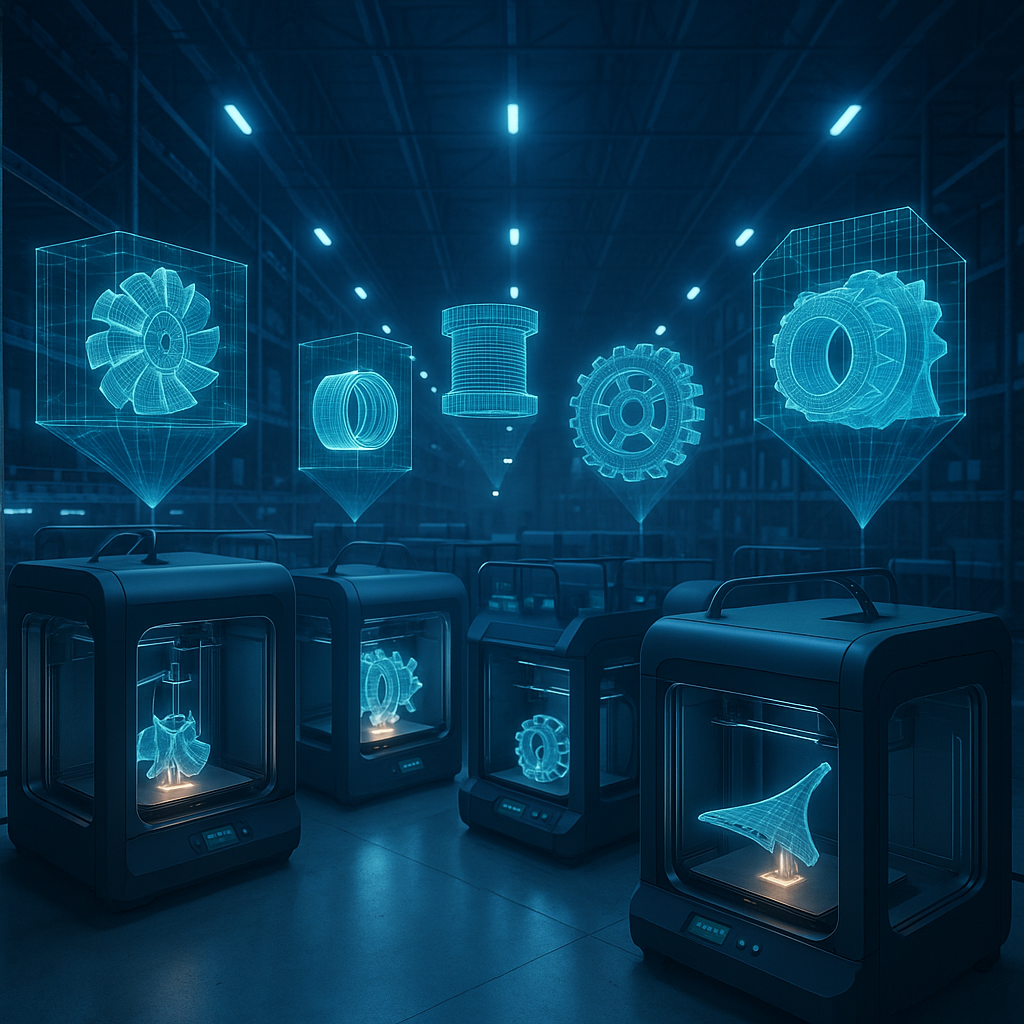
In a recent article by Manufacturing Digital Magazine, the spotlight on the top 3D printing companies underscores a growing trend towards leveraging digital inventory and on-demand manufacturing. This shift is not just about new technologies but a fundamental rethinking of how inventory is managed and products are delivered in the manufacturing sector.
What Happened
The article highlights leading 3D printing companies pushing the boundaries of additive manufacturing to support digital inventory strategies. These companies are developing platforms and technologies that enable the storage of digital product files instead of physical stock. When a part or product is needed, it can be printed on-demand, reducing the need for large warehouses and minimizing supply chain bottlenecks.
While specific company details and technology deployments are not exhaustively covered, the trend is clear: digital inventory 3D printing is gaining traction as a viable alternative to traditional inventory management.
Why It Matters
Digital inventory 3D printing addresses several critical challenges faced by manufacturers today. Traditional inventory systems require significant capital tied up in physical stock, which can become obsolete or degrade over time. On-demand 3D printing reduces these costs and risks by shifting inventory into digital form, allowing manufacturers to respond more flexibly to market demands.
Moreover, this approach can significantly shorten lead times, reduce waste, and improve customization capabilities. For industries with complex supply chains or those requiring spare parts in remote locations, digital inventory can be a game-changer, enabling rapid production without the logistics delay.
Technical Context
At its core, digital inventory 3D printing combines advanced additive manufacturing technologies with digital file management and secure data transmission. The process involves storing validated 3D CAD files in secure digital repositories. When a part is requested, the file is sent to a local or regional 3D printer capable of producing the component with the required material and precision.
Recent advances in multi-material printing, improved print speeds, and enhanced material properties have expanded the range of parts suitable for this approach. Additionally, integration with enterprise resource planning (ERP) systems and blockchain for digital rights management is emerging to ensure security and traceability.
However, challenges remain in standardizing file formats, ensuring print quality consistency across distributed sites, and certification for critical applications, especially in aerospace, medical, and automotive sectors.
Near-Term Prediction Model
Within the next 12 to 24 months, digital inventory 3D printing is expected to move from pilot and niche commercial applications to broader adoption across mid-sized and large manufacturers. Early adopters in aerospace and healthcare will continue to lead, given their high-value parts and stringent customization needs.
Investment in digital infrastructure, including secure cloud platforms and advanced printers, will accelerate. Partnerships between 3D printing companies and logistics providers may emerge to create decentralized production networks.
Nonetheless, full-scale replacement of traditional inventory is unlikely in the immediate term due to certification hurdles and the need for robust quality assurance protocols.
What to Watch
- Development of standardized protocols for digital file formats and quality benchmarks.
- Regulatory progress on certification of 3D printed parts for critical industries.
- Advances in multi-material and high-speed printing technologies.
- Adoption of blockchain or other secure methods for digital inventory rights management.
- Emergence of integrated platforms combining digital inventory, on-demand printing, and supply chain logistics.
- Case studies demonstrating cost savings and lead-time reductions in complex supply chains.
While the source article provides an overview of the top players in 3D printing, many details about specific digital inventory implementations remain scarce. Continued monitoring of industry announcements and pilot projects will be essential to understanding the full impact of this transformative approach.