
What Happened
Recent research published by Frontiers provides a comprehensive classification of X-ray attenuation properties for a broad range of additive manufacturing and 3D printing materials using computed tomography (CT) across energy levels from 70 to 140 kVp. This dataset fills a critical knowledge gap by quantifying how various printing materials interact with X-rays, a factor that directly influences volumetric and tomographic printing processes.
Why It Matters
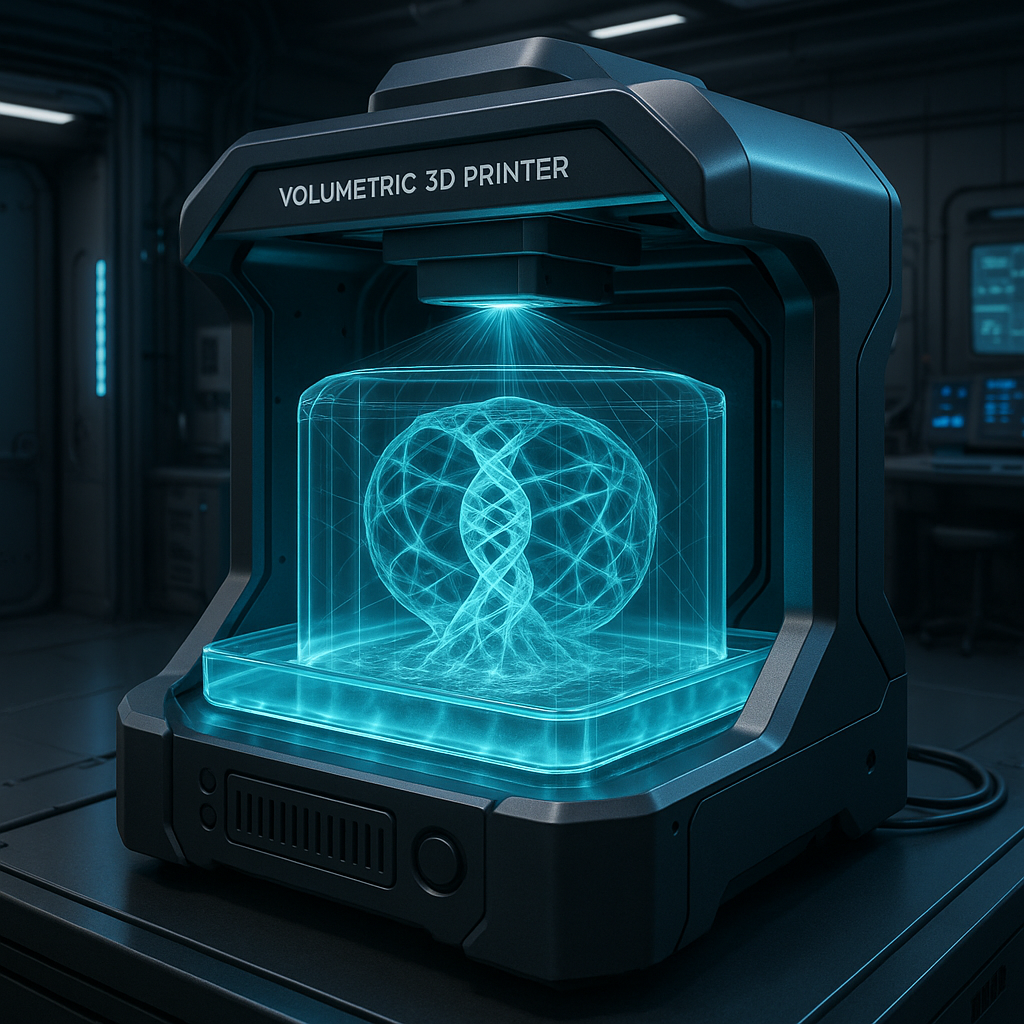
Volumetric printing, especially tomographic printing, represents a frontier in 3D manufacturing that enables the creation of complex objects in a single step by projecting light or radiation from multiple angles into a resin or material volume. Understanding the X-ray attenuation characteristics of printing materials is vital because these properties dictate how energy penetrates and interacts with the material during the build process. The new classification allows for more precise calibration of tomographic printing setups, potentially improving print resolution, speed, and material compatibility.
Moreover, this knowledge supports the advancement of hybrid manufacturing techniques that combine volumetric printing with traditional methods, enabling novel applications in biomedical devices, aerospace components, and custom tooling where internal structures and material gradients are critical.
Technical Context
Tomographic printing leverages computed tomography principles in reverse: instead of reconstructing images from X-ray data, it uses controlled radiation projections to solidify photosensitive materials volumetrically. The attenuation of X-rays by the material affects the dose distribution inside the volume, influencing polymerization or curing rates.
The study from Frontiers systematically measured attenuation coefficients for materials commonly used in additive manufacturing, including photopolymers, thermoplastics, and metal powders, at varying X-ray energies. These measurements enable the refinement of computational models that simulate dose deposition during printing, which is essential for optimizing exposure parameters and ensuring uniform solidification.
Prior to this work, data on X-ray interactions with 3D printing materials were scattered or incomplete, limiting the ability to scale tomographic printing beyond experimental setups. This research provides a foundational dataset for engineers and scientists to better predict how different materials will behave under tomographic printing conditions.
Near-Term Prediction Model
Over the next 12 to 24 months, we anticipate that volumetric and tomographic printing will progress from pilot-scale demonstrations to early commercial applications, particularly in sectors demanding rapid prototyping of complex geometries with internal features. The availability of detailed X-ray attenuation data will accelerate this transition by enabling manufacturers to tailor material formulations and printing parameters more effectively.
We expect incremental improvements in print quality and material diversity as this data informs the design of new photopolymers and composite materials optimized for volumetric curing. Additionally, software tools incorporating these attenuation profiles will become more sophisticated, allowing real-time adjustment of exposure patterns to compensate for material heterogeneity.
What to Watch
- Development of specialized photopolymers and composite resins engineered for optimized X-ray attenuation to enhance print fidelity in tomographic processes.
- Emergence of integrated software platforms that utilize attenuation data to simulate and control volumetric printing in real time.
- Adoption of volumetric printing in biomedical manufacturing, where internal lattice structures and biocompatible materials require precise control over curing depth and uniformity.
- Collaborations between material scientists and additive manufacturing companies to expand the library of materials characterized for tomographic printing.
- Regulatory and standardization efforts addressing quality control and repeatability in volumetric printing processes leveraging X-ray attenuation knowledge.
While the Frontiers study provides crucial foundational data, further research is needed to explore dynamic changes in attenuation during printing, effects of material aging, and interactions in multi-material volumetric prints. These unknowns represent both challenges and opportunities for future innovation in tomographic and volumetric 3D printing.