
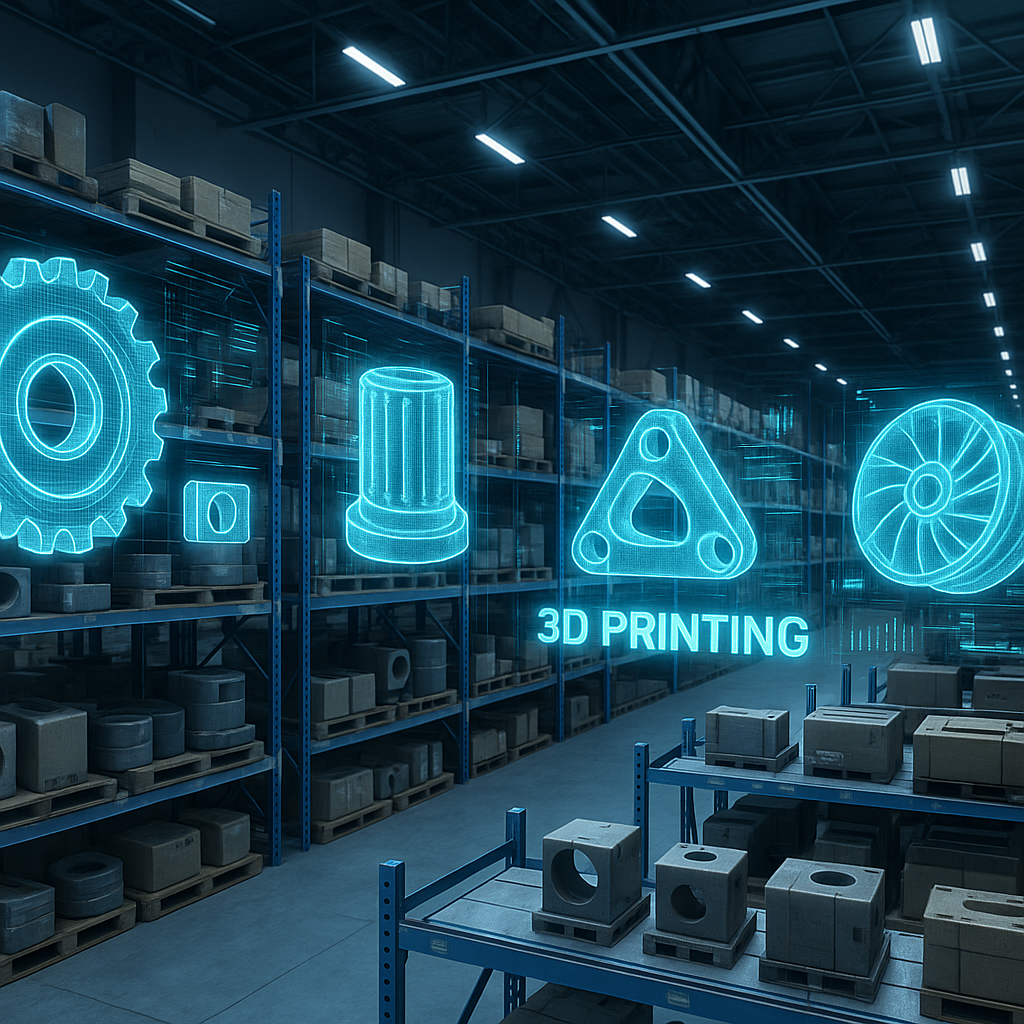
In early 2026, The Motley Fool published insights on top 3D printing stocks for 2026, highlighting the growing investor interest in additive manufacturing technologies. Among the emerging trends, digital inventory 3D printing is gaining traction as a transformative approach to on-demand production and supply chain optimization.
What Happened
While the article primarily focuses on investment opportunities in 3D printing stocks, it indirectly underscores the rising prominence of digital inventory strategies enabled by 3D printing. Digital inventory refers to the storage of product designs and manufacturing data in digital formats rather than physical stockpiles. This paradigm allows companies to produce parts and products on-demand, reducing warehousing costs and lead times.
The increasing investor enthusiasm for 3D printing firms in 2026 reflects broader industry adoption of digital inventory models. Companies are investing in technologies that support rapid, localized manufacturing, thereby mitigating supply chain disruptions and inventory obsolescence risks.
Why It Matters
Digital inventory 3D printing represents a fundamental shift in how businesses manage production and logistics. Traditional supply chains rely heavily on maintaining physical inventories, which are costly and inflexible. By contrast, digital inventory enables a just-in-time manufacturing approach, where products are fabricated only when needed, directly from digital blueprints.
This shift can lead to significant cost savings, reduced waste, and improved responsiveness to market demand fluctuations. Moreover, it enhances customization capabilities, allowing manufacturers to tailor products without the need for large-scale tooling changes.
For investors, the rise of digital inventory 3D printing signals new growth avenues in sectors ranging from aerospace and automotive to healthcare and consumer goods. Companies that successfully integrate digital inventory strategies may achieve competitive advantages through agility and efficiency.
Technical Context
Digital inventory 3D printing relies on several converging technologies:
- Advanced additive manufacturing hardware: Modern 3D printers capable of producing functional parts with high precision and diverse materials.
- Robust digital asset management: Secure platforms for storing, versioning, and distributing digital design files.
- Software integration: Seamless interfaces between design, production planning, and printer control systems.
- Quality assurance and certification: Processes to ensure printed parts meet regulatory and performance standards.
<pCurrently, many companies are piloting digital inventory solutions, often in collaboration with supply chain partners. However, widespread commercial adoption requires overcoming challenges such as intellectual property protection, standardization of digital files, and scalability of printing processes.
Near-term Prediction Model
Over the next 12 to 24 months, digital inventory 3D printing is expected to transition from pilot projects to more commercial deployments, particularly in industries where supply chain agility is critical. Early adopters will likely be sectors with complex, low-volume parts such as aerospace and medical devices.
Investment in companies offering integrated digital inventory platforms, combining software and hardware solutions, is predicted to increase. However, the pace of adoption will depend on resolving technical and regulatory hurdles and demonstrating clear cost-benefit cases.
What to Watch
- Development of industry standards: Efforts to standardize digital file formats and certification protocols will be critical for interoperability and trust.
- Intellectual property frameworks: Innovations in protecting digital designs from unauthorized use or reproduction.
- Advancements in printing materials and speed: Breakthroughs that enable faster production of high-quality parts at scale.
- Strategic partnerships: Collaborations between 3D printing firms, manufacturers, and logistics providers to build integrated digital inventory ecosystems.
- Regulatory acceptance: Approvals and guidance from authorities that facilitate adoption in regulated industries.
While the exact details of companies leading the digital inventory 3D printing charge remain partially unknown, the trend is clear: digital inventory is poised to become a cornerstone of on-demand manufacturing, reshaping supply chains and investment landscapes alike.