
What Happened
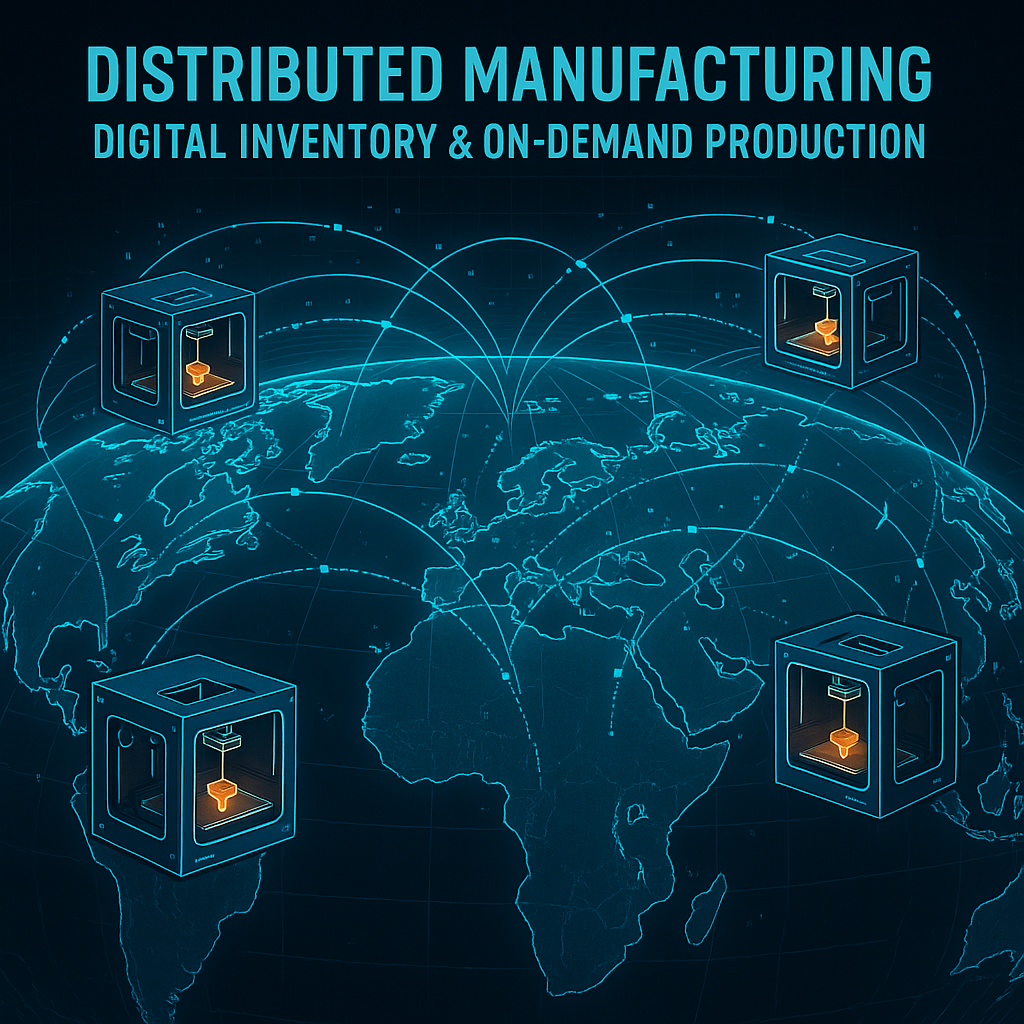
According to a recent article from progress-index.com, top 3D printing service suppliers are increasingly driving innovation in global manufacturing through distributed manufacturing models. This shift emphasizes digital inventory and on-demand production capabilities, which are transforming traditional supply chains and inventory management strategies. While specific supplier names and detailed operational practices are not disclosed, the trend highlights a growing reliance on additive manufacturing networks to decentralize production and reduce inventory costs.
Why It Matters
The move toward distributed manufacturing powered by 3D printing has significant implications for industries worldwide. Traditional manufacturing relies heavily on centralized production facilities and extensive physical inventories, which can lead to inefficiencies, high warehousing costs, and supply chain vulnerabilities. Digital inventory — storing product designs digitally rather than physical stock — enables companies to produce parts and products on demand, closer to the point of use.
This approach reduces lead times, lowers transportation emissions, and enhances supply chain resilience by mitigating risks associated with geopolitical disruptions, natural disasters, or pandemics. For sectors such as aerospace, automotive, healthcare, and consumer goods, the ability to digitally store and rapidly manufacture parts can improve responsiveness to market demands and reduce waste.
Technical Context
Distributed manufacturing leverages advances in additive manufacturing technologies, including material extrusion, powder bed fusion, and binder jetting. These technologies enable the production of complex geometries and customized components without the need for tooling or molds. Digital inventory systems integrate with cloud-based design repositories and manufacturing execution systems (MES) to securely manage and distribute digital design files.
Key technical enablers include standardized file formats, cybersecurity measures to protect intellectual property, and quality assurance protocols to ensure consistency across distributed production sites. Additionally, advances in automation and remote monitoring allow manufacturers to oversee production quality and maintenance from afar.
However, challenges remain in scaling distributed manufacturing networks, including interoperability of machines from different vendors, certification of parts produced across multiple sites, and managing variable production conditions.
Near-term Prediction Model
In the next 12 to 24 months, distributed manufacturing supported by digital inventory is expected to transition from pilot phases to broader commercial adoption, particularly in high-value, low-volume sectors. Companies will likely invest in expanding their network of certified 3D printing service providers and enhancing digital infrastructure for secure file sharing and production tracking.
We anticipate a gradual shift in supply chain strategies, with an increasing number of firms adopting hybrid models combining traditional manufacturing with on-demand 3D printing capabilities. This hybrid approach will help balance cost and flexibility while addressing quality and regulatory requirements.
Market impact scores around 70/100 reflect strong transformative potential tempered by challenges in standardization and scale. Confidence levels are moderate at 65/100 due to uncertainties in regulatory acceptance and technology interoperability.
What to Watch
- Development of industry-wide standards for digital inventory management and distributed manufacturing processes.
- Advancements in cybersecurity protocols protecting digital design files in distributed networks.
- Regulatory frameworks evolving to certify parts produced via distributed 3D printing.
- Emergence of new business models that monetize digital inventory and on-demand manufacturing services.
- Integration of AI and machine learning to optimize distributed production scheduling and quality control.
- Expansion of partnerships between traditional manufacturers and 3D printing service suppliers to enable hybrid manufacturing ecosystems.
While the article from progress-index.com provides a high-level overview, further details on specific supplier innovations, technology deployments, and case studies remain unavailable. Monitoring these developments will be critical to understanding how distributed manufacturing reshapes global supply chains.