
What Happened
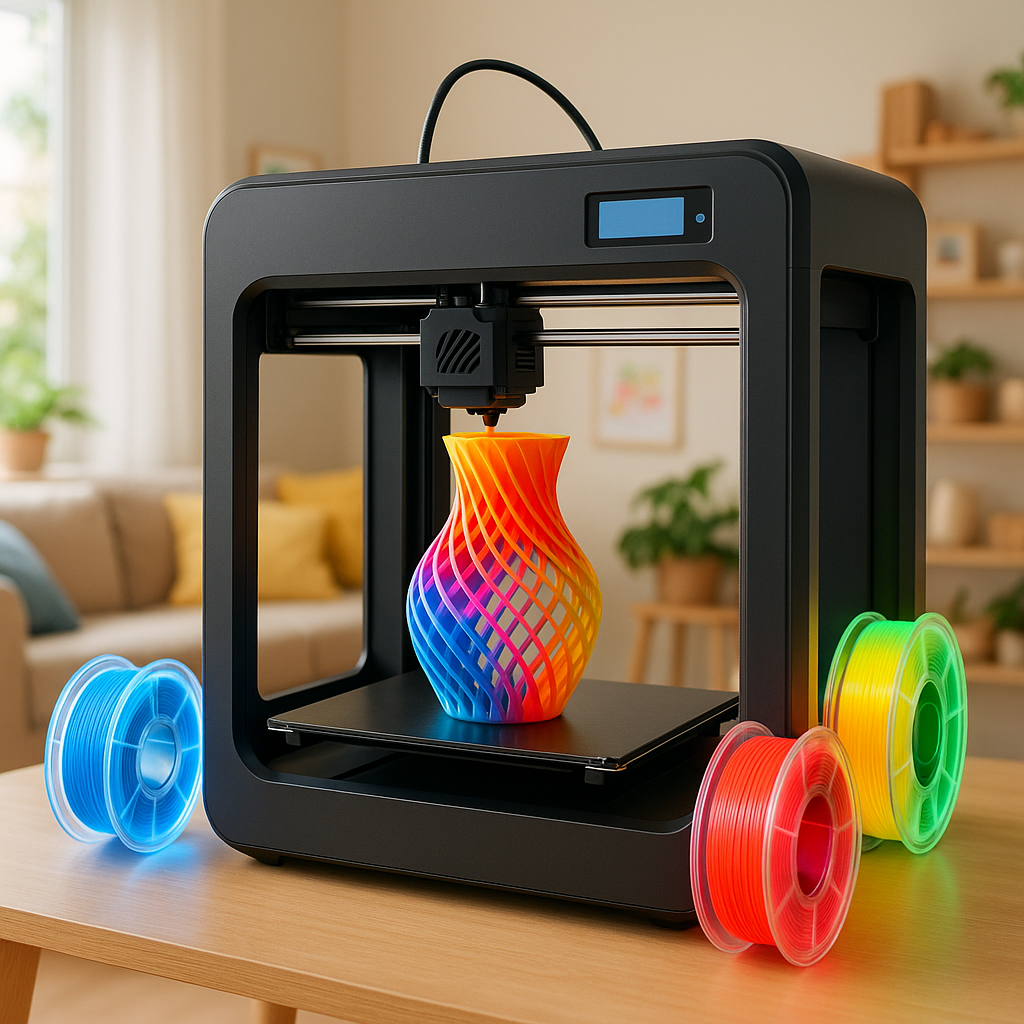
ELEGOO recently launched the Centauri Carbon 2 Combo, a family-friendly multicolor 3D printer, as reported by The Manila Times. This new printer is designed for ease of use, targeting family and educational environments, and supports multicolor 3D printing through a combo kit. While the announcement highlights the device’s user-friendly nature and multicolor capabilities, details about the specific technical innovations or filament compatibility remain limited in the source.
Why It Matters
The introduction of the Centauri Carbon 2 Combo is significant as it reflects a growing trend toward making advanced 3D printing technologies accessible to non-expert users, including families and educational settings. Multicolor printing is a key step in expanding the creative and functional possibilities of 3D printing, enabling more intricate and visually complex objects without post-processing. This accessibility also opens doors for integrating emerging smart filaments—materials embedded with sensors, conductive elements, or bio-responsive compounds—into everyday printing projects.
Smart filaments, which respond to environmental stimuli or have embedded functionalities, represent a frontier in 3D printing materials that could transform product design, prototyping, and bio-embedded applications. While the Centauri Carbon 2 Combo’s announcement does not explicitly mention smart filament compatibility, its family-friendly and multicolor capabilities suggest a platform that could support or evolve toward such advanced materials in the near future.
Technical Context
Multicolor 3D printing typically involves either multi-extruder systems or sophisticated filament switching mechanisms. These allow printers to deposit different colored materials in a single print job, enhancing the aesthetic and functional complexity of the output. ELEGOO’s Centauri Carbon 2 Combo likely employs one of these approaches, optimized for ease of use and reliability to suit a broad user base.
Smart filaments, on the other hand, incorporate materials such as thermochromic, piezoelectric, conductive, or bioactive components. Their integration requires printers capable of handling specialized extrusion parameters and sometimes multiple materials simultaneously. The challenge lies in balancing printability, material stability, and functional performance. Currently, smart filaments are mostly explored within R&D and pilot stages, with limited commercial availability due to cost and processing complexity.
The Centauri Carbon 2 Combo’s family-friendly design may not yet explicitly support these advanced materials, but the move toward multicolor, accessible printers creates a foundation for future upgrades or companion materials that include smart filament properties.
Near-term Prediction Model
Given the current state of the technology and market, the Centauri Carbon 2 Combo is positioned in the early commercial stage for multicolor family-friendly printers. The printer’s launch suggests a time horizon of 12 to 24 months for widespread adoption in home and educational settings. Smart filament integration into such platforms is likely to follow in the next 24 to 36 months, as material science advances and printer hardware adapts to handle complex filaments.
The impact score for this launch in the context of smart and bio-embedded materials is moderate (around 60/100) because it represents a necessary but indirect step toward smart filament mainstreaming. Confidence in this trajectory is reasonably high (around 75/100) given market trends toward accessible multicolor printing and ongoing R&D in smart materials.
What to Watch
- Announcements from ELEGOO or other manufacturers regarding explicit support for smart filaments and bio-embedded materials in future printer models.
- Development of filament formulations that combine multicolor capabilities with smart functionalities, such as color-changing or conductive properties.
- Educational and family market adoption rates for multicolor printers, which could drive demand for smart filament-compatible devices.
- Advances in printer extrusion technology that enable stable, reliable printing of composite smart filaments.
- Collaborations between filament producers and printer manufacturers to certify smart filament compatibility and optimize print profiles.
In conclusion, ELEGOO’s Centauri Carbon 2 Combo launch marks a meaningful step toward democratizing multicolor 3D printing. While it currently focuses on family-friendly usability, it lays groundwork for the integration of smart filaments and bio-embedded materials, which remain an exciting frontier in additive manufacturing technology.