
What Happened
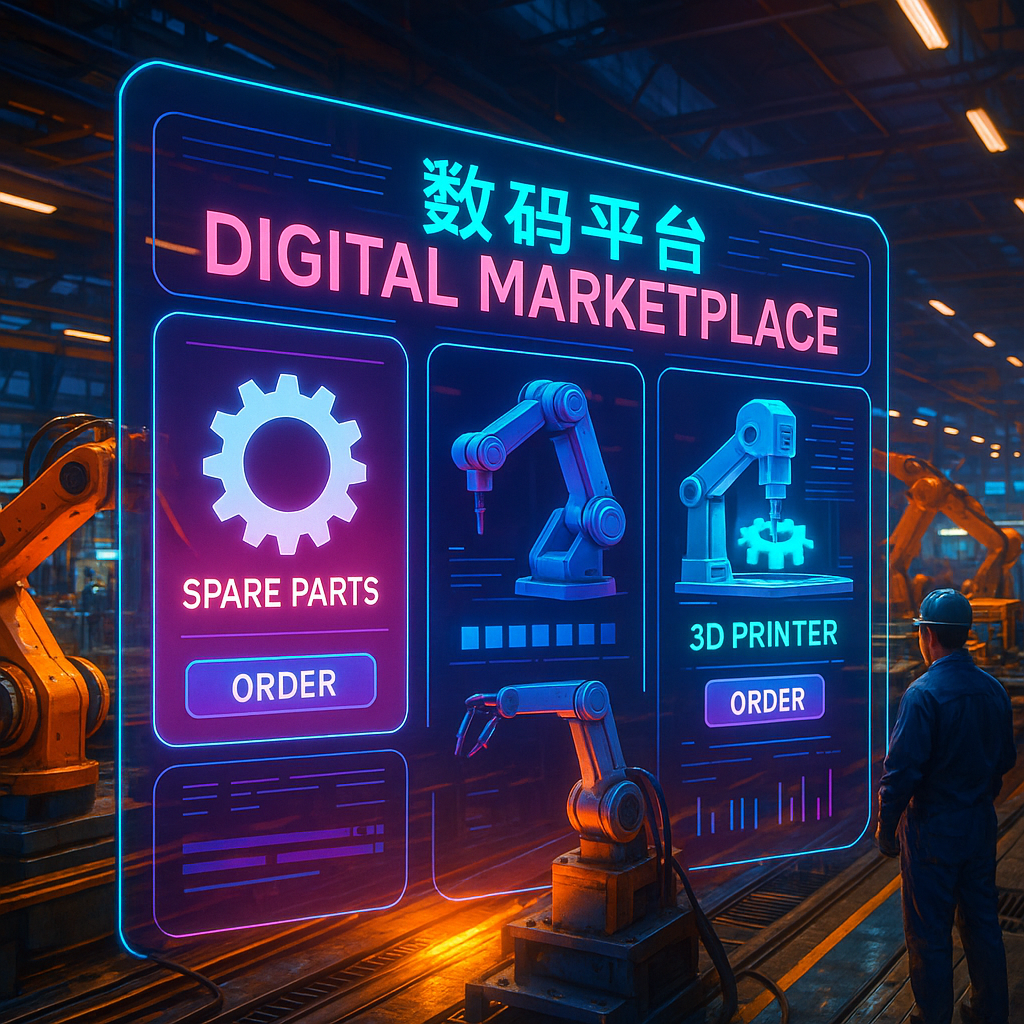
China’s industrial ecosystem has taken a significant step forward with the launch of the Haizol marketplace, a digital platform that connects factories and buyers for manufacturing parts and services. This new marketplace reportedly delivers up to 20% cost savings for buyers, a notable achievement in the competitive manufacturing sector. The platform’s ability to aggregate supply and demand efficiently is driving these savings, making it a critical development in the on-demand spares and digital inventory space.
Why It Matters
The Haizol marketplace’s emergence is a game changer for the manufacturing supply chain, particularly in the context of on-demand spares. Traditionally, companies maintain large inventories of spare parts to avoid downtime, which ties up capital and storage resources. Haizol’s model reduces the need for extensive physical inventory by enabling rapid digital ordering and fulfillment of parts directly from factories. This shift not only cuts costs but also accelerates response times for critical spares, enhancing operational resilience.
Moreover, the 20% cost savings reported by Haizol indicate a significant efficiency gain that could ripple across global supply chains. For manufacturers facing pressure to reduce costs while maintaining agility, this marketplace model provides a compelling alternative to traditional procurement and inventory management strategies.
Technical Context
Haizol operates as a digital marketplace that leverages data integration, real-time quoting, and factory network coordination to streamline manufacturing procurement. While specific technical details of the platform’s architecture are not fully disclosed, it likely incorporates advanced supply chain algorithms, demand forecasting, and possibly elements of AI to match buyers with the optimal factories based on cost, capacity, and lead time.
In the broader context of 3D printing and on-demand manufacturing, Haizol’s platform exemplifies how digital inventory can be virtualized. Instead of physical stockpiles, digital inventory is represented by manufacturing capacity and rapid production capability distributed across a network of factories. This aligns closely with the concept of on-demand spares, where parts are produced as needed rather than stored.
However, Haizol’s marketplace is not limited to additive manufacturing; it integrates various manufacturing methods, which broadens its applicability but also introduces complexity in quality control and standardization across diverse factories.
Near-Term Prediction Model
Given the current commercial deployment of Haizol and its reported cost savings, the platform is at a Commercial maturity stage. Over the next 12 to 18 months, we predict:
- Adoption Growth: Increased uptake by small and medium manufacturers seeking cost efficiencies in spare parts procurement.
- Expansion of Factory Network: More factories, including those specializing in 3D printing, will join to diversify capabilities and improve responsiveness.
- Integration with Digital Inventory Systems: Enterprises may begin integrating Haizol’s marketplace with their ERP and inventory management software to enable seamless on-demand ordering.
Impact score is estimated at 75/100 due to significant cost and efficiency benefits, with a confidence level of 70/100 reflecting some uncertainties around scaling and quality assurance.
What to Watch
- Quality Assurance Mechanisms: How Haizol ensures consistent quality across a distributed factory network will be critical for broader adoption in mission-critical spares.
- Platform Integration: Development of APIs and partnerships enabling integration with enterprise resource planning and digital inventory platforms.
- Geographic Expansion: Whether Haizol expands beyond China to serve global supply chains, which would amplify its impact.
- 3D Printing Inclusion: The degree to which additive manufacturing factories join the platform, enhancing rapid production of complex or customized spares.
- Competitive Responses: Emergence of similar marketplaces or incumbent supply chain providers adapting to this on-demand model.
While specific operational data and user case studies remain scarce, Haizol’s initial results mark an important milestone in the evolution of digital inventory and on-demand spares procurement. This development merits close attention from manufacturers, supply chain managers, and 3D printing industry stakeholders seeking to leverage technology-driven cost savings and agility.