
What happened
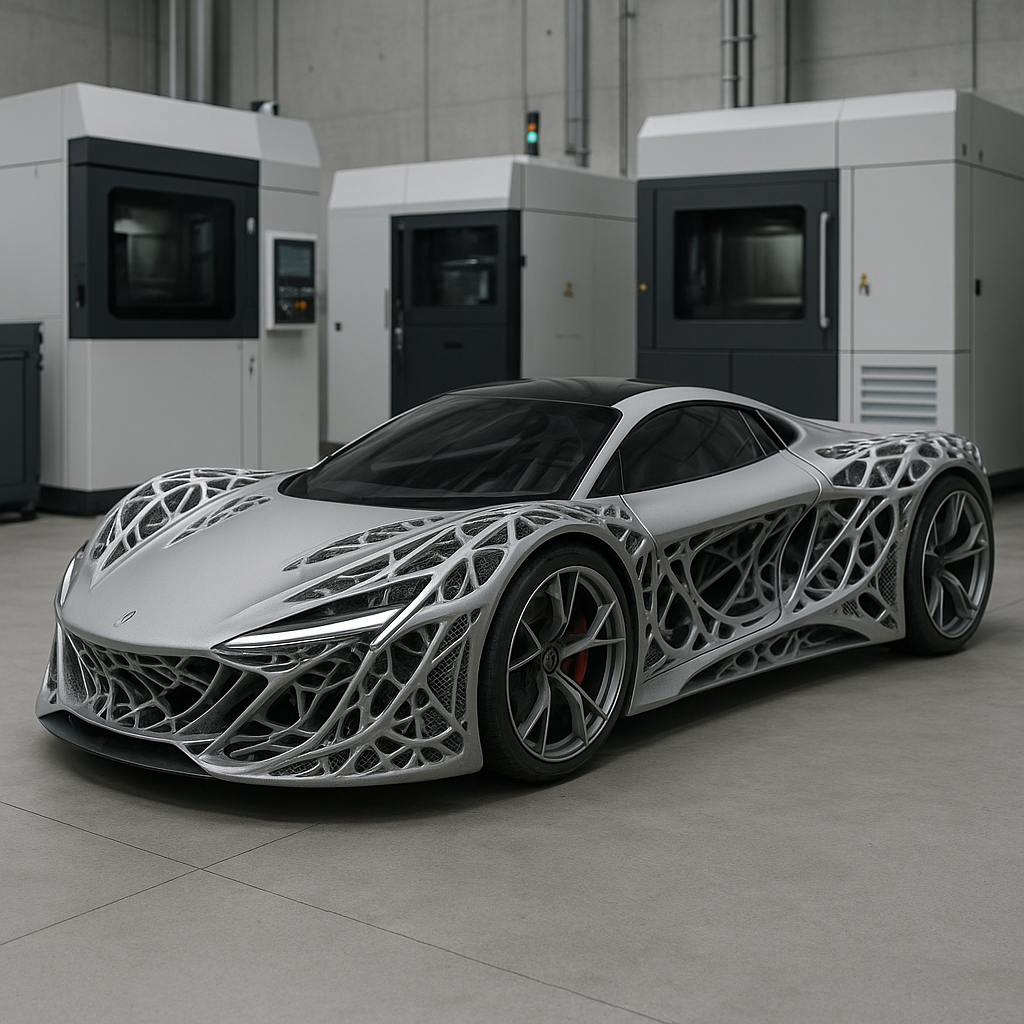
The LongBow Speedster recently showcased a milestone in additive manufacturing by unveiling a fully 3D printed body, as reported by VoxelMatters. This development is significant not only for automotive design but also for the broader implications it holds in digital inventory and on-demand spare parts manufacturing. The fully printed body demonstrates how additive manufacturing can transcend prototyping and small components to produce large, functional, and complex assemblies.
Why it matters
The ability to produce a full vehicle body via 3D printing signals a transformative shift in supply chain and inventory management. Traditionally, automotive manufacturers rely on extensive physical inventories of spare parts, which require storage, logistics, and capital investment. The LongBow Speedster’s approach hints at a future where digital inventory—virtual repositories of part designs—can be converted into physical spares on demand, reducing costs and lead times.
This shift is particularly impactful for industries where spare parts availability is critical yet challenging due to obsolescence, low demand, or complex logistics. On-demand spares manufacturing can reduce waste, improve sustainability, and enable more resilient supply chains by localizing production closer to the point of need.
Technical context
The LongBow Speedster’s fully 3D printed body likely leverages advanced additive manufacturing technologies capable of producing large-scale, high-strength polymer or composite parts, although exact materials and printer models have not been disclosed. The achievement underscores progress in printer build volumes, multi-material printing, and post-processing techniques that ensure structural integrity and finish quality suitable for automotive use.
Moreover, the integration of digital design workflows with additive manufacturing enables rapid iteration and customization, critical for on-demand production. However, challenges remain in certification, durability testing, and scalability of such printed bodies for mass-market vehicles.
Near-term prediction model
In the next 12-24 months, we expect pilot programs and limited commercial applications of fully or partially 3D printed vehicle components to expand. Early adopters will likely focus on niche or specialty vehicles where customization and low volume justify additive manufacturing costs. Concurrently, digital inventory platforms will grow, enabling manufacturers and service providers to store and distribute digital spare parts files rather than physical stock.
While full vehicle bodies printed on demand remain at the pilot stage, incremental adoption through printed spares and body panels will build confidence and technical maturity. Regulatory frameworks will evolve to accommodate additive manufacturing parts, accelerating commercial deployment.
What to watch
- Material advancements enabling stronger, lighter, and more durable printed vehicle parts.
- Development of standards and certifications for 3D printed automotive components.
- Emergence of digital inventory platforms that facilitate secure, scalable on-demand spares production.
- Partnerships between automotive OEMs and additive manufacturing service providers to pilot on-demand spare parts programs.
- Progress in printer hardware that supports larger build volumes and multi-material printing.
While the LongBow Speedster’s fully printed body marks an exciting frontier, details on production speed, cost, and long-term performance remain unknown. These factors will be critical in determining how quickly on-demand spares and digital inventory models disrupt traditional manufacturing and supply chains.