
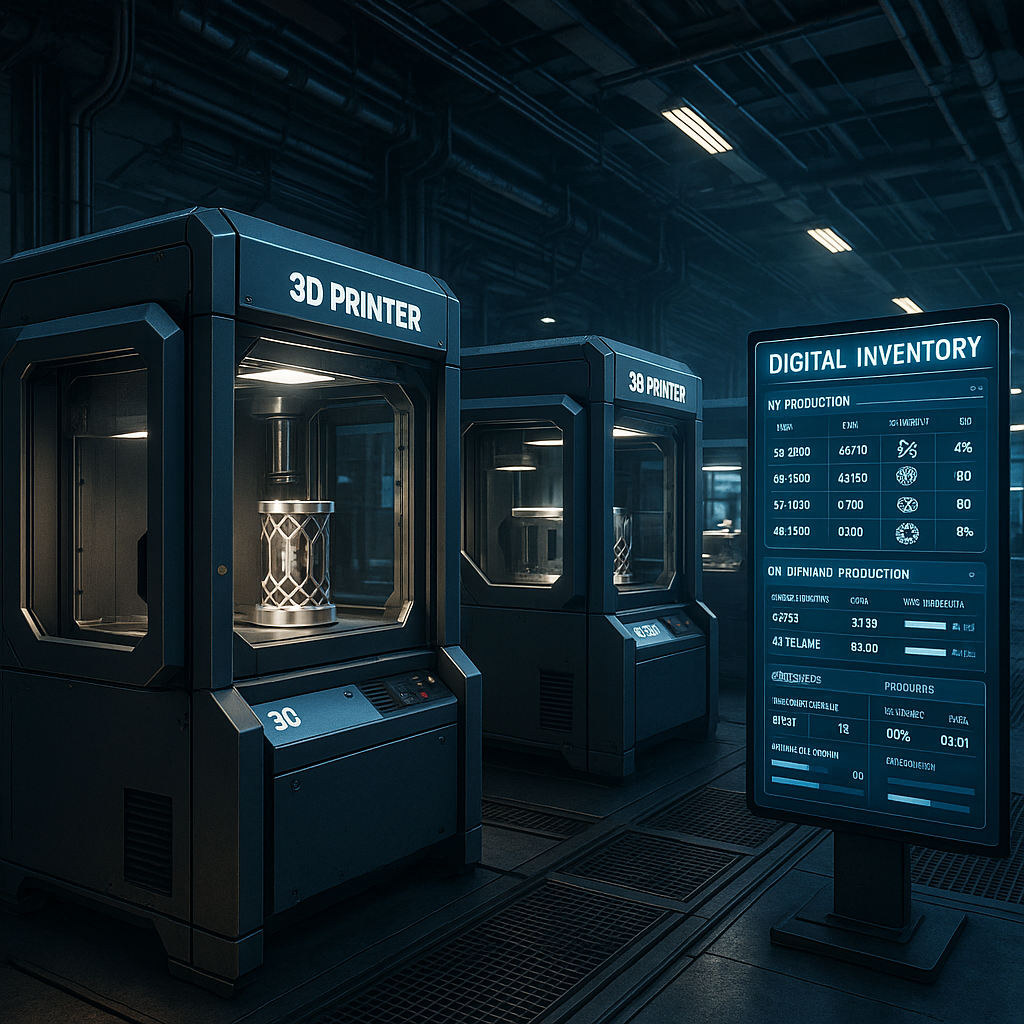
In a recent development reported by columbiatribune.com, a metal 3D printing manufacturer has expanded its technological capabilities, marking a significant milestone in advanced manufacturing. While specific details about the new technologies or processes remain undisclosed, this expansion signals important shifts in how metal additive manufacturing (AM) integrates with broader industrial trends such as distributed manufacturing and digital inventory management.
What Happened
The manufacturer, whose identity and exact technological upgrades are not fully detailed in the source, has broadened its metal 3D printing reach. This likely involves enhancements in machine capabilities, materials, or process efficiencies. The announcement comes amid growing interest in metal AM as a strategic enabler for flexible, localized production systems.
Why It Matters
This expansion is crucial because it underpins the evolution of distributed manufacturing—a model where production is decentralized, closer to end-users, and driven by digital inventories rather than physical stockpiles. Metal 3D printing is uniquely suited to this approach due to its ability to produce complex, high-performance parts on-demand without the need for tooling or large batch runs.
By advancing metal AM technologies, manufacturers can reduce lead times, lower inventory costs, and improve supply chain resilience. This is especially vital for industries like aerospace, automotive, and defense, where part customization and rapid response to demand fluctuations are critical.
Technical Context
Metal 3D printing encompasses several processes such as selective laser melting (SLM), electron beam melting (EBM), and directed energy deposition (DED). These technologies enable layer-by-layer construction of parts from metal powders or wire feedstock.
The recent expansion likely involves improvements in one or more of these processes, potentially enhancing build speed, part quality, or material properties. Additionally, integration with digital inventory systems allows for seamless order processing and production scheduling, facilitating true on-demand manufacturing.
However, challenges remain, including ensuring consistent part certification, scaling production volumes, and managing supply chain logistics for metal powders and post-processing.
Near-Term Prediction Model
Over the next 12 to 24 months, we expect the following trajectory:
- Maturity Stage: Commercial adoption will continue to grow, with pilot projects expanding into more mainstream production.
- Impact Score: Estimated around 75 out of 100, reflecting significant but still maturing influence on manufacturing ecosystems.
- Confidence Level: Moderate to high (around 70), based on current investment trends and technological progress.
Key risks include regulatory hurdles, material supply constraints, and integration complexity with existing manufacturing workflows.
What to Watch
- Announcements of specific new metal AM technologies or materials from this manufacturer or competitors.
- Case studies demonstrating successful deployment of distributed manufacturing models using metal 3D printing.
- Development of standards and certification protocols for metal AM parts to enable broader industrial adoption.
- Advances in digital inventory platforms that integrate with metal 3D printing for real-time production orchestration.
- Supply chain innovations addressing metal powder sourcing and recycling.
In summary, the expansion of metal 3D printing technologies heralds a new phase in distributed manufacturing and digital inventory strategies. While many details remain to be disclosed, the implications for on-demand, localized production are profound and warrant close attention from industry stakeholders.