
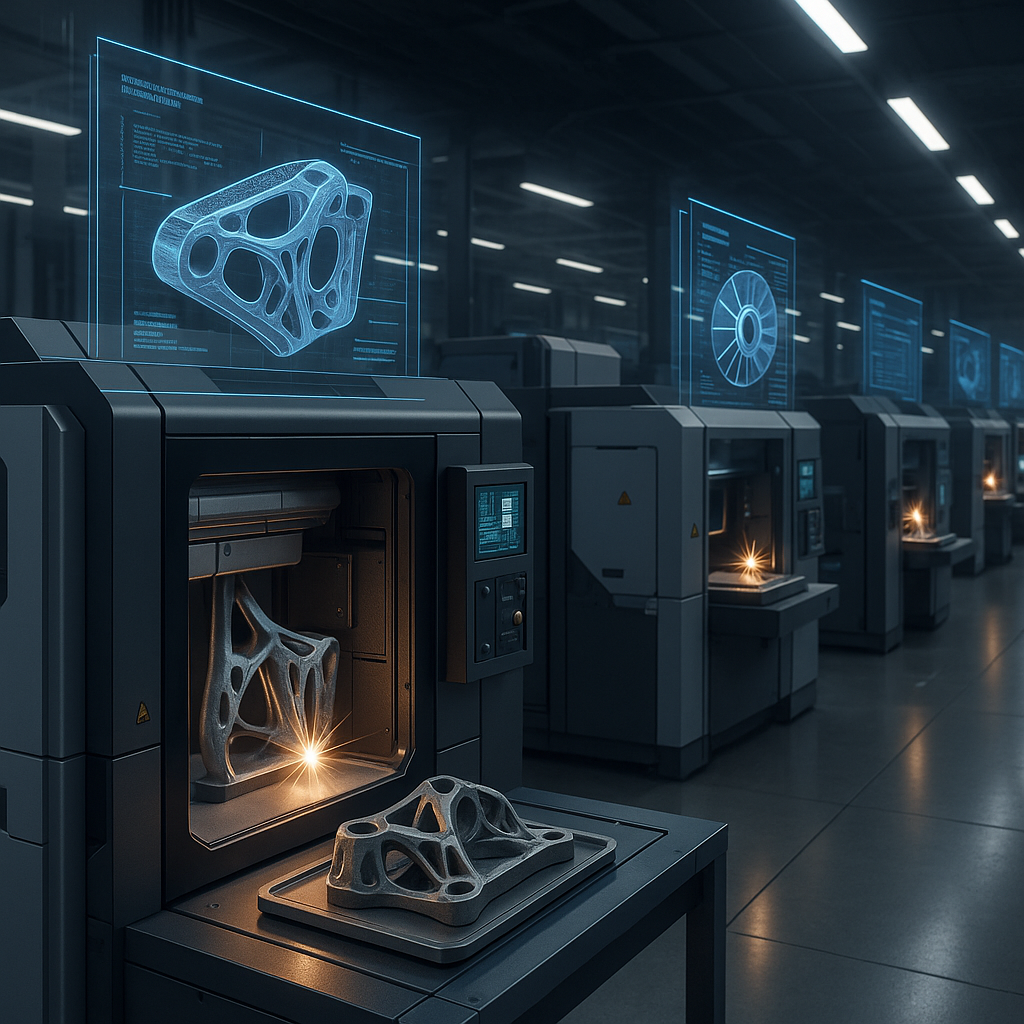
In a recent development reported by The Progress Index, a metal 3D printing manufacturer has expanded its technological capabilities, marking a notable advance in the realm of advanced manufacturing. This expansion is particularly relevant to the evolving landscape of distributed manufacturing and digital inventory management, where on-demand production and localized fabrication are becoming increasingly critical.
What Happened
The company in question has enhanced its metal additive manufacturing technologies, broadening the scope and sophistication of its production portfolio. While specific details on the new technologies or processes implemented remain undisclosed, the announcement signals a strategic push toward more versatile and scalable metal 3D printing solutions. This move likely includes improvements in machine capabilities, material options, or software integration, enabling more complex and higher-quality metal parts to be manufactured on demand.
Why It Matters
This development matters because it directly supports the growth of distributed manufacturing models. Distributed manufacturing relies on decentralized production facilities that can rapidly produce parts closer to the point of use, reducing inventory costs and lead times. Metal 3D printing is a key enabler of this paradigm shift, allowing manufacturers to maintain digital inventories—virtual catalogs of parts—rather than physical stockpiles. When a part is needed, it can be printed locally, on demand, minimizing waste and logistical complexity.
Expanding metal 3D printing capabilities enhances the feasibility of this model for more industries, especially those requiring high-strength, precision metal components such as aerospace, automotive, and medical sectors. The ability to produce complex metal parts on demand helps companies respond swiftly to supply chain disruptions and customize products without the need for costly tooling or large inventories.
Technical Context
Metal additive manufacturing has evolved significantly over the past decade, with technologies such as powder bed fusion, directed energy deposition, and binder jetting gaining traction. Each technique offers different trade-offs in terms of speed, resolution, material compatibility, and cost. The recent expansion likely involves advancements in one or more of these processes, possibly improving print speed, surface finish, or material properties.
Moreover, integration with digital inventory systems and manufacturing execution software is critical. These systems manage the digital files, production scheduling, and quality assurance processes essential for on-demand manufacturing. The expanded capabilities may include better software tools for design optimization, real-time monitoring, and automated post-processing, all of which contribute to a more robust and scalable manufacturing ecosystem.
Near-Term Prediction Model
In the next 12 to 24 months, we anticipate that this technological expansion will catalyze broader adoption of metal 3D printing in distributed manufacturing networks. Early adopters in aerospace and defense sectors will likely lead, given their stringent requirements and high part complexity. As costs decrease and process reliability improves, small and medium enterprises in automotive aftermarket and industrial machinery may follow suit.
This growth will also drive further investments in digital inventory platforms, emphasizing interoperability and security to protect intellectual property while enabling rapid production. However, challenges remain in certification, material standards, and scaling post-processing operations.
What to Watch
- Announcements detailing the specific technological enhancements and new material capabilities introduced by the manufacturer.
- Partnerships or pilot programs deploying these advanced metal 3D printing systems in distributed manufacturing settings.
- Regulatory and certification progress for metal 3D printed parts, especially in safety-critical industries.
- Development of integrated digital inventory platforms that facilitate secure, on-demand production workflows.
- Emergence of complementary technologies such as automated post-processing and AI-driven design optimization.
In summary, the expansion of metal 3D printing technologies as reported by The Progress Index underscores a pivotal moment in digital inventory and on-demand manufacturing. As metal 3D printing matures and integrates more deeply with distributed manufacturing frameworks, the industry moves closer to a future where inventory is digital, production is localized, and supply chains are more resilient and responsive.