
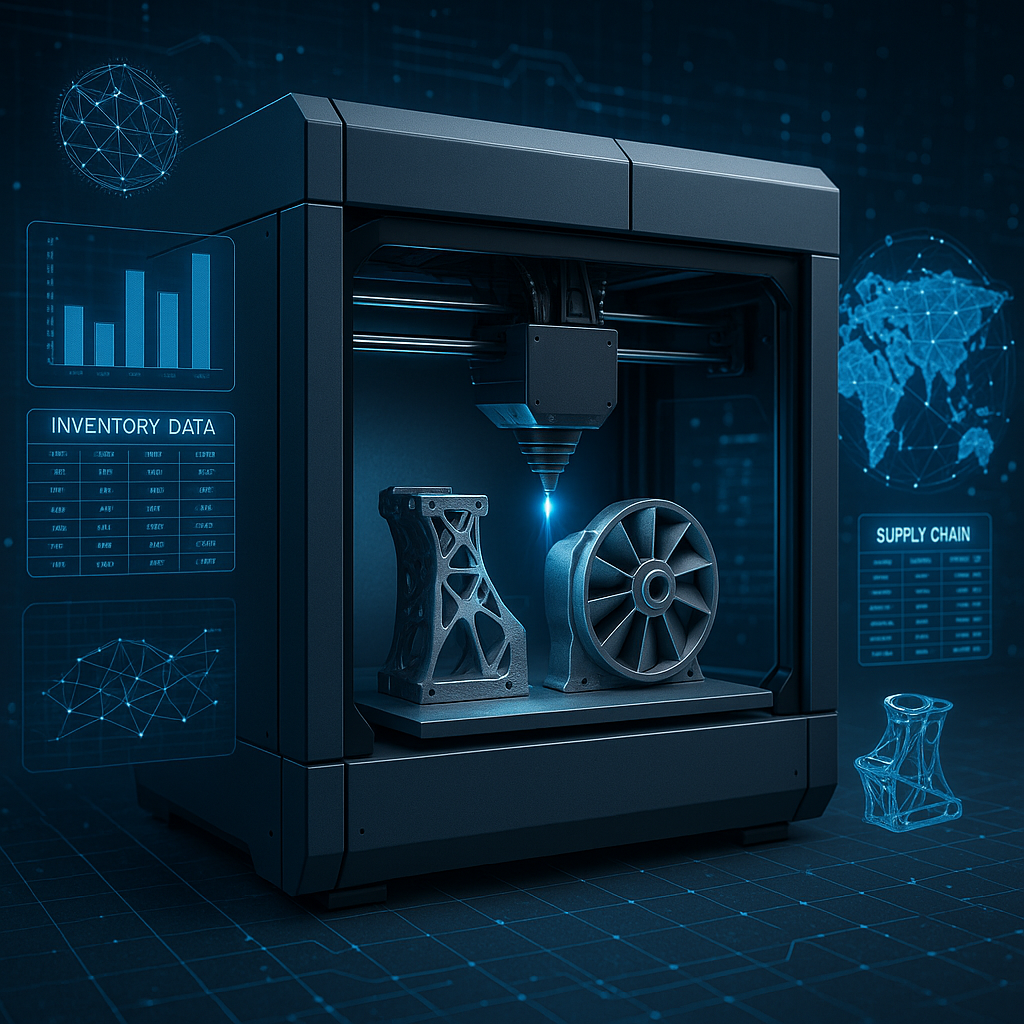
A recent report from the Tallahassee Democrat highlights a significant development in the metal 3D printing sector where a manufacturer is expanding its technological capabilities. This move underscores a growing trend toward integrating advanced metal additive manufacturing into broader industrial ecosystems, particularly within distributed manufacturing and digital inventory frameworks.
What Happened
A metal 3D printing manufacturer has announced an expansion of its technological reach, though specific details about the new capabilities or product lines were not disclosed in the source article. This expansion likely includes improvements in machine performance, material variety, or process scalability, which are critical for serving more complex industrial applications. The announcement signals the company’s intent to strengthen its position in the competitive advanced manufacturing market.
Why It Matters
This development is significant for several reasons. First, metal 3D printing is a cornerstone technology for distributed manufacturing, enabling production closer to the point of use and reducing reliance on centralized factories. By enhancing metal additive manufacturing capabilities, the manufacturer supports a shift toward more flexible, localized production networks.
Second, the expansion facilitates more effective digital inventory and on-demand manufacturing strategies. Instead of stockpiling physical parts, companies can maintain digital inventories—secure, version-controlled 3D models—and produce parts as needed. This reduces inventory costs, mitigates supply chain disruptions, and accelerates response times to market demands.
Technical Context
Metal 3D printing technologies, such as selective laser melting (SLM) and electron beam melting (EBM), have matured but still face challenges related to speed, material properties, and post-processing requirements. Expanding technological reach may involve innovations in laser power, build volume, multi-material capabilities, or automation enhancements that reduce operator intervention.
Moreover, integrating metal 3D printing with digital inventory systems requires robust software ecosystems for design, validation, and secure data management. The ability to reliably produce metal parts on demand also depends on standardized quality assurance protocols and certification processes, which are evolving alongside the technology.
Near-Term Prediction Model
In the next 12 to 24 months, we expect this manufacturer’s technological advancements to catalyze broader adoption of metal 3D printing within distributed manufacturing networks. Early commercial deployments will likely focus on high-value, low-volume parts in aerospace, medical devices, and specialized industrial equipment, where customization and rapid iteration are paramount.
Digital inventory strategies will become increasingly integrated with production planning software, enabling seamless transition from digital design to physical part fabrication. However, widespread industrial adoption will require overcoming remaining barriers such as certification complexity, part consistency, and cost competitiveness with traditional manufacturing methods.
What to Watch
- Announcements detailing the specific technological enhancements—such as new machine models, materials, or software platforms—that the manufacturer introduces.
- Partnerships or pilot programs with key industrial players aiming to deploy distributed manufacturing and digital inventory solutions.
- Regulatory and certification developments that impact metal 3D printed parts, influencing adoption speed.
- Advancements in quality assurance technologies, including in-situ monitoring and AI-driven defect detection.
- Market responses, including competitor moves and customer feedback, which will shape the trajectory of metal 3D printing expansion.
While the full scope of the manufacturer’s expansion remains undisclosed, the strategic implications for distributed manufacturing and digital inventory are clear: metal 3D printing is poised to become a critical enabler of more agile, resilient, and efficient production ecosystems.