
What Happened
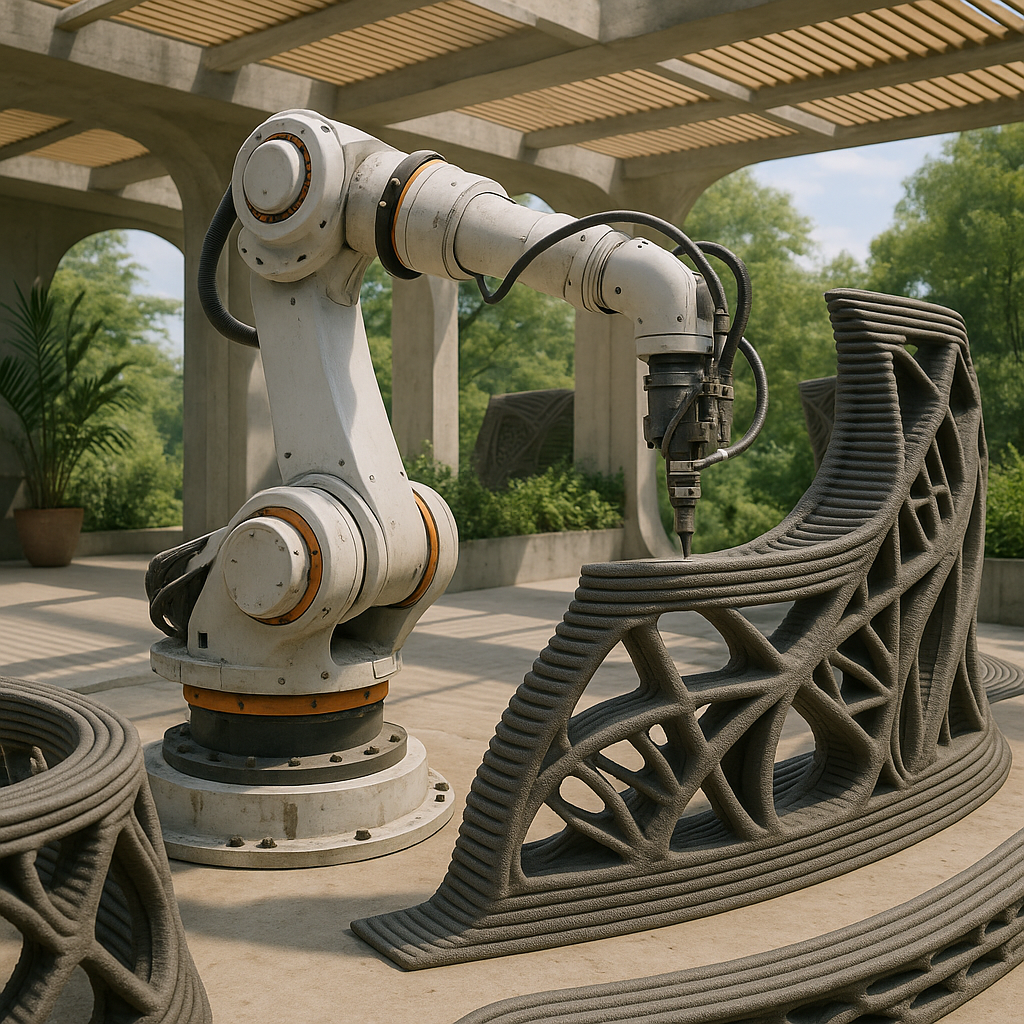
Printerior has launched Circdal, a new platform aimed at building a sustainable architectural ecosystem through advanced 3D printing techniques. The initiative utilizes robotic arm 3D printing technology to enable non-planar, multi-axis fabrication processes that promise to revolutionize how architectural components and structures are produced.
Why It Matters
The launch of Circdal marks a significant step forward in integrating robotics and additive manufacturing for sustainable construction. Traditional building methods are often resource-intensive and generate substantial waste. By harnessing robotic arms capable of multi-axis motion, Circdal enables complex geometries and optimized material usage that planar 3D printers cannot achieve. This capability aligns with the growing demand for environmentally responsible building practices and offers architects and engineers unprecedented design freedom.
Technical Context
Robotic arm 3D printing represents a subset of non-planar and multi-axis additive manufacturing where a multi-degree-of-freedom robotic manipulator deposits material along curved and tilted surfaces. Unlike conventional Cartesian 3D printers limited to layer-by-layer planar deposition, robotic arms can print on contoured surfaces, enabling stronger parts with improved mechanical properties and reduced need for support structures.
Circdal leverages this technology to fabricate architectural components that are not only structurally optimized but also tailored for sustainability. While specific technical details of Circdal’s hardware and software stack remain undisclosed, it likely incorporates advanced path planning algorithms, real-time motion control, and material extrusion systems compatible with construction-grade materials. The platform’s ecosystem approach suggests integration with design tools and supply chains to streamline the entire build process.
Near-term Prediction Model
Circdal is currently positioned at the Pilot stage of maturity, moving beyond R&D but not yet fully commercialized. Within the next 12 to 18 months, we expect Printerior to conduct pilot projects demonstrating Circdal’s capabilities in real-world architectural applications, possibly including modular building elements or facade components.
The impact score for Circdal’s approach is estimated at 75/100, reflecting strong potential to disrupt sustainable construction practices through multi-axis 3D printing. Confidence in this projection is moderate (65/100) due to limited public technical disclosures and the inherent challenges of scaling robotic arm printing for architectural-scale projects.
What to Watch
- Announcements of pilot projects or partnerships with architectural firms and construction companies deploying Circdal technology.
- Technical publications or demonstrations detailing Circdal’s robotic arm control strategies, material systems, and integration with design software.
- Development of new sustainable materials compatible with multi-axis robotic extrusion processes.
- Regulatory and certification progress for 3D printed architectural components produced by Circdal.
- Competitive advancements from other players in robotic arm 3D printing and sustainable architecture ecosystems.
While many specifics about Circdal’s technical implementation remain unknown, its launch signals a promising direction for the convergence of robotics, additive manufacturing, and sustainable building design. Continued monitoring of Printerior’s progress will be essential to understanding the broader impact on the architectural and construction industries.