
What Happened
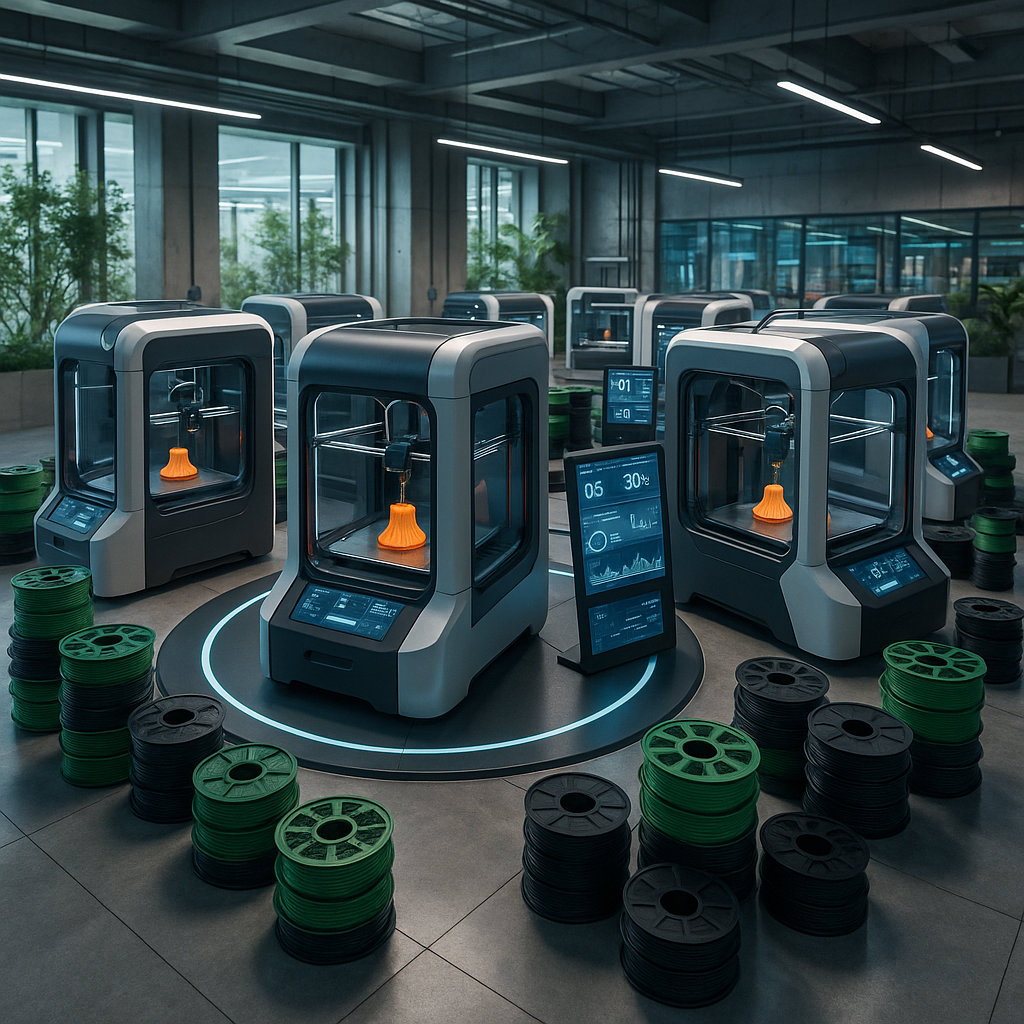
Batch.Works and E3D have announced a strategic collaboration to scale circular 3D printing farms both within the UK and internationally, as reported by tctmagazine.com. This partnership aims to advance the deployment of distributed print farms that leverage circular manufacturing principles—emphasizing reuse, recycling, and sustainability—while expanding the capabilities of collaborative and swarm 3D printing technologies.
Why It Matters
The convergence of distributed print farms with circular economy models marks a pivotal shift in additive manufacturing. Traditionally, 3D printing has been limited by isolated machines or single-location farms, often with linear material use. By scaling circular print farms, Batch.Works and E3D are addressing key challenges in supply chain resilience, sustainability, and manufacturing agility.
This initiative is significant because it demonstrates how collaborative printing networks can optimize resource use, reduce waste, and decentralize production. The ability to operate print farms that are interconnected and capable of sharing workloads and materials aligns with growing industry demands for localized, on-demand manufacturing that minimizes environmental impact.
Technical Context
Distributed print farms consist of multiple 3D printers networked together to operate as a cohesive unit, often managed via cloud-based software platforms. Batch.Works is known for its advanced print farm management software that orchestrates job scheduling, printer utilization, and quality control across geographically dispersed machines. E3D brings deep expertise in extrusion technology and modular hotends, which are critical for material flexibility and print quality.
The circular aspect involves integrating material recycling processes and closed-loop workflows. This may include filament recycling systems, reuse of printed parts, and smart inventory management to minimize raw material consumption. The technical challenge lies in synchronizing hardware capabilities with software intelligence to enable seamless collaboration among printers, maintain quality standards, and support diverse materials including recycled and bio-based filaments.
While the announcement does not detail specific hardware upgrades or new recycling technologies, the partnership suggests a holistic approach combining Batch.Works’ software ecosystem with E3D’s hardware innovations to create scalable, sustainable print farms.
Near-term Prediction Model
Within the next 12 to 18 months, we expect the partnership to pilot multiple distributed print farms incorporating circular manufacturing principles. These deployments will likely focus on industrial and educational sectors in the UK initially, with gradual international expansion.
Key performance indicators to watch include print farm throughput, material recycling rates, and operational cost reductions. The integration of real-time monitoring and adaptive scheduling will enhance productivity and reduce downtime, setting new benchmarks for collaborative printing efficiency.
However, full commercial maturity—characterized by widespread adoption of circular distributed print farms across multiple industries—may take 3 to 5 years, contingent on advances in recycling technology, material science, and software interoperability.
What to Watch
- Material Recycling Innovations: Breakthroughs in filament recycling and reuse will be critical to realizing truly circular print farms.
- Software Integration: The evolution of Batch.Works’ platform to seamlessly manage heterogeneous printer fleets and materials.
- International Expansion: How the partnership navigates regulatory, logistical, and market challenges outside the UK.
- Collaborative Print Farm Use Cases: Emerging applications in automotive, aerospace, and consumer goods that demonstrate the value of distributed, circular manufacturing.
- Environmental Impact Metrics: Transparent reporting on waste reduction, carbon footprint, and lifecycle sustainability.
In summary, the Batch.Works and E3D collaboration signals a forward-looking model for additive manufacturing that leverages swarm and collaborative printing to build resilient, sustainable, and scalable distributed print farms. While many technical and market details remain to be disclosed, this initiative underscores the growing importance of integrating circular economy principles into 3D printing’s next frontier.