
What Happened
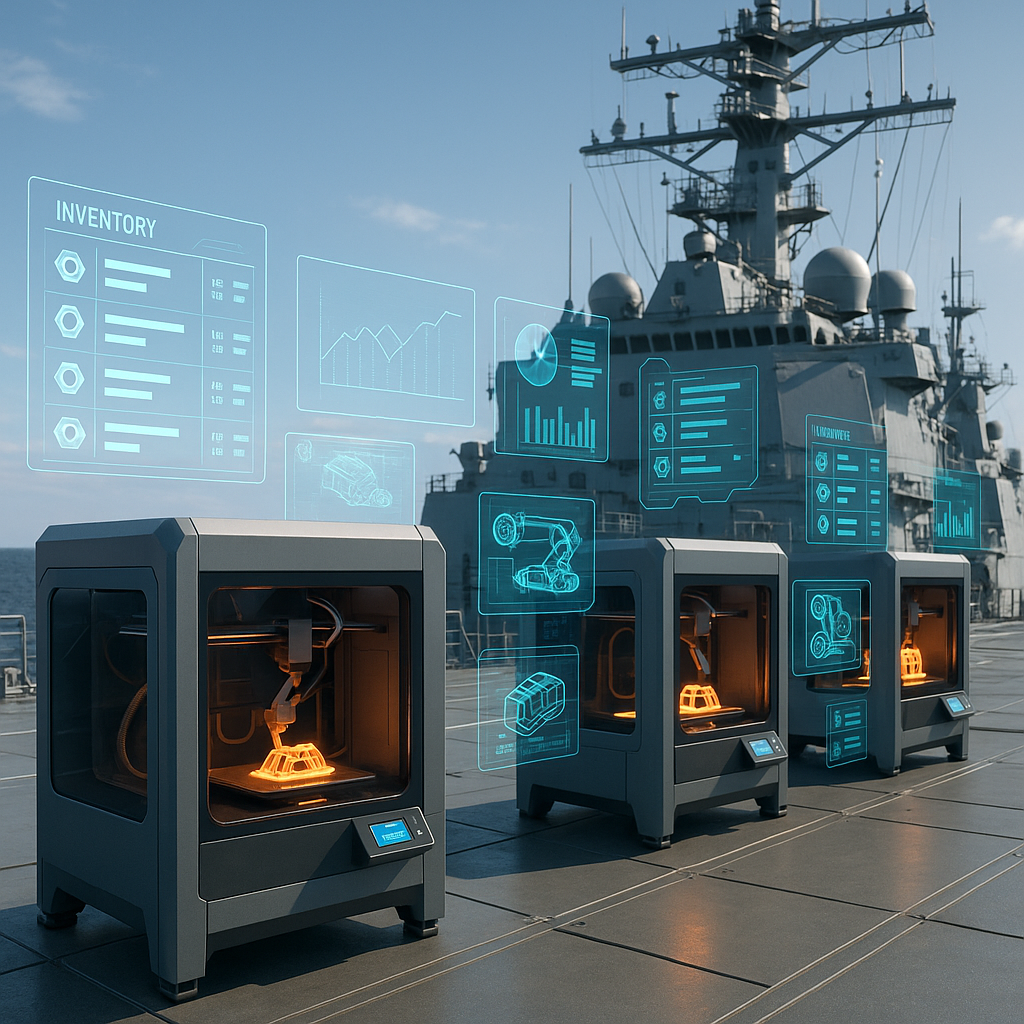
In a strategic move to modernize military logistics and manufacturing, the U.S. Navy has advanced its frontline 3D printing capabilities, reinforcing cooperation within the AUKUS defense partnership. According to a recent report by Defence Industry Europe, this initiative aims to strengthen logistics and manufacturing agility among the U.S., U.K., and Australia.
Why It Matters
The enhancement of frontline 3D printing technology represents a pivotal shift toward distributed manufacturing in military operations. By enabling on-demand production of critical parts directly at or near the point of need, the Navy is reducing reliance on traditional supply chains that can be lengthy and vulnerable to disruption. This capability not only accelerates repair and maintenance cycles but also enhances operational readiness and resilience, especially in contested or remote environments.
For the AUKUS alliance, this development signifies a deeper integration of shared technological capabilities, fostering interoperability and mutual support. The ability to digitally share designs and produce parts across allied forces exemplifies a new paradigm in digital inventory management and collaborative defense manufacturing.
Technical Context
While specific technical details of the Navy’s upgraded 3D printing systems remain undisclosed, it is evident that the focus is on ruggedized, deployable additive manufacturing units capable of producing a broad range of components from metals and polymers. These systems likely incorporate advanced materials science, precision control, and secure digital design transfer protocols to ensure reliability and security in operational theaters.
The integration with digital inventory systems is crucial here. By maintaining a digital catalog of validated parts, the Navy can rapidly select and print needed components, minimizing physical inventory and enabling a just-in-time logistics model. This approach aligns with broader trends in Industry 4.0 and smart manufacturing, adapted for defense applications.
Near-term Prediction Model
Given the current trajectory, frontline 3D printing within the U.S. Navy and the AUKUS partnership is transitioning from pilot to early commercial deployment stages. Over the next 12 to 24 months, we can expect expanded operational testing, increased scale of deployment aboard vessels and forward bases, and refinement of digital inventory integration.
The impact score for this development is high (estimated 75/100) due to its potential to transform logistics and manufacturing resilience. Confidence in this prediction is moderate (around 70/100) because of uncertainties around the pace of technology maturation, interoperability challenges, and cybersecurity considerations.
What to Watch
- Progress in secure, encrypted digital design sharing among AUKUS members to safeguard intellectual property and operational security.
- Advancements in material capabilities allowing frontline printers to produce more complex, high-performance parts.
- Development of standardized protocols for distributed manufacturing to ensure quality and interoperability across allied forces.
- Integration of AI-driven predictive maintenance and inventory management to optimize print-on-demand schedules.
- Potential expansion of this technology to other allied nations or branches of the U.S. military.
While many operational specifics remain proprietary or classified, this move by the U.S. Navy signals a significant step toward a future where distributed manufacturing and digital inventory reshape defense logistics and frontline readiness.