
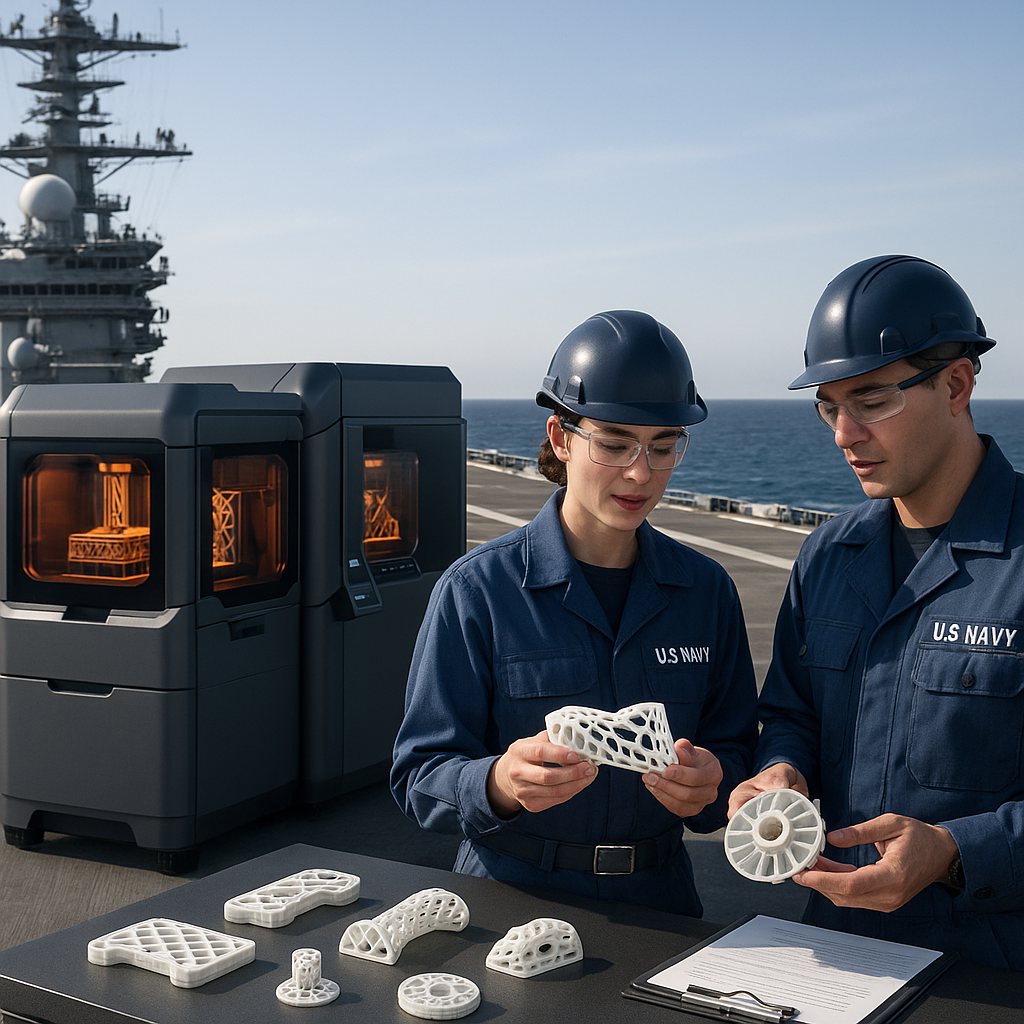
In a notable development for on-demand spares and digital inventory management, US Navy shipbuilders have successfully installed 3D printed parts on both an aircraft carrier and a submarine. This milestone, reported by Business Insider on January 29, 2026, marks a practical validation of additive manufacturing’s potential to transform naval logistics and maintenance operations.
What Happened
Shipbuilders incorporated 3D printed components directly onto active US Navy vessels — an aircraft carrier and a submarine. These parts were produced using additive manufacturing techniques and then deployed in real operational environments. According to Business Insider, the Navy’s response to the parts was positive, indicating satisfaction with their performance and reliability. While the exact nature and number of parts have not been publicly disclosed, the initiative represents a significant step beyond laboratory testing or isolated trials.
Why It Matters
The integration of 3D printed parts aboard frontline naval vessels has major implications for supply chain resilience and maintenance efficiency. Traditionally, spare parts for complex military hardware must be manufactured, stored, and transported, sometimes leading to long lead times and logistical bottlenecks. By enabling on-demand production of spares directly at or near the point of use, the Navy can reduce inventory costs, minimize downtime, and increase mission readiness.
This approach aligns with broader trends toward digital inventory systems, where physical stockpiles are supplemented or replaced by digital part files that can be printed as needed. For defense applications, where operational continuity is critical and supply chains are vulnerable to disruption, on-demand spares offer a strategic advantage. Moreover, this success could pave the way for other branches of the military and even commercial shipping industries to adopt similar additive manufacturing strategies.
Technical Context
The 3D printed parts installed on the Navy vessels likely involved advanced materials and printing methods capable of meeting stringent military standards. Although specific technical details remain undisclosed, typical naval additive manufacturing applications require components to withstand harsh environmental conditions, mechanical stresses, and safety certifications. Common technologies include metal powder bed fusion and high-performance polymers printed via selective laser sintering or fused deposition modeling with aerospace-grade materials.
Quality assurance and certification processes are critical, given the safety-sensitive nature of naval hardware. The Navy’s positive reception suggests that the printed parts met or exceeded these rigorous standards. This achievement reflects advances in both 3D printing hardware and software, including improved design for additive manufacturing (DfAM), simulation, and post-processing techniques that ensure part integrity.
Near-term Prediction Model
We assess the maturity of on-demand 3D printed spares for naval applications as moving from pilot toward early commercial deployment. The timeline for broader adoption across the US Navy and allied forces is likely within the next 12 to 24 months, as printing infrastructure expands and certification pathways become standardized.
Impact Score: 75/100 — The potential to reduce inventory costs and improve operational readiness is substantial, but widespread adoption depends on overcoming remaining technical and regulatory hurdles.
Confidence: 70/100 — While the initial deployments are promising, full-scale implementation requires validation across diverse ship classes and mission profiles.
What to Watch
- Expansion of 3D printing capabilities on naval vessels and shore-based facilities.
- Development of standardized certification and quality assurance protocols for printed parts.
- Integration of digital inventory platforms that enable seamless part ordering, printing, and tracking.
- Reports on the longevity and performance of printed parts in operational conditions.
- Potential adoption of similar on-demand spares strategies by other military branches and commercial maritime operators.
While many operational details remain confidential, this milestone represents a clear validation of additive manufacturing’s role in future naval logistics. Continued monitoring of the Navy’s implementation and subsequent industry adoption will provide valuable insights into the evolving landscape of digital inventory and on-demand spares.