
What Happened
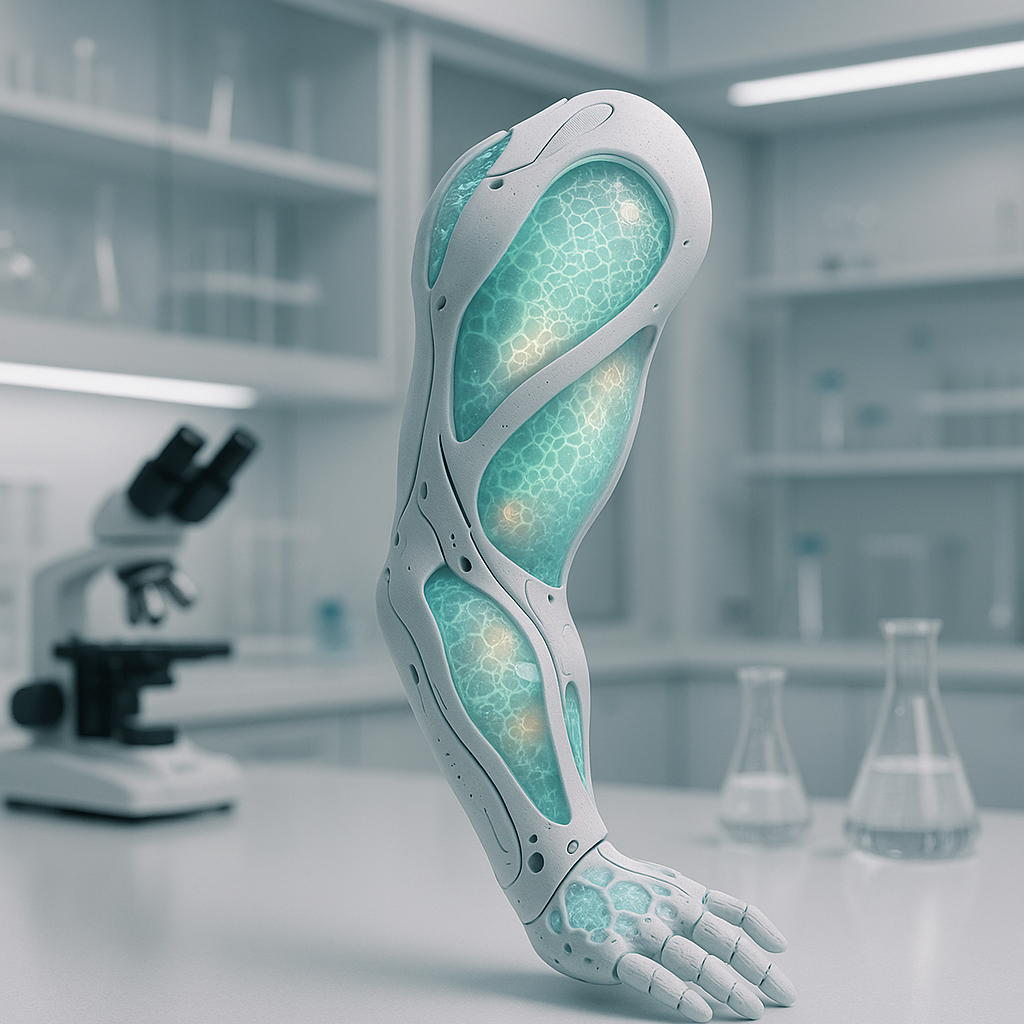
Recent developments in the manufacturing of 3D printed prosthetics, as outlined in a Thomasnet article, highlight the evolving landscape of materials and processes used in prosthetic fabrication. While traditional materials dominate the current market, there is a growing interest in integrating smart and bio-embedded materials, particularly living materials, to create prosthetics that are more adaptive, responsive, and personalized.
Why It Matters
The integration of living materials into 3D printed prosthetics represents a paradigm shift in healthcare technology. Unlike inert materials, living materials can respond dynamically to environmental stimuli, potentially offering enhanced comfort, improved functionality, and even self-healing capabilities. This advancement could dramatically improve the quality of life for prosthetic users by enabling devices that adapt to physiological changes, reduce skin irritation, and provide sensory feedback.
Technical Context
Currently, most 3D printed prosthetics rely on polymers, composites, and lightweight metals optimized for strength and durability. The emerging field of living materials involves embedding biological components such as bacteria, fungi, or cultured cells within a 3D printed matrix. These bio-embedded constructs can perform functions like sensing, self-repair, or biochemical interaction with the user’s body.
Technically, integrating living materials into prosthetics requires overcoming several challenges: ensuring biocompatibility, maintaining the viability of living cells during and after printing, and developing suitable printing processes that can handle both biological and synthetic materials. Advances in bioprinting, hydrogel development, and synthetic biology are gradually addressing these hurdles.
While the Thomasnet article focuses primarily on current manufacturing processes and materials, it underscores an ongoing trend towards more sophisticated material systems that could incorporate living elements in the near future. However, specific details on living materials in prosthetics remain sparse, indicating this is an under-covered yet promising niche.
Near-term Prediction Model
Within the next 24 to 36 months, pilot projects and research prototypes incorporating living materials into 3D printed prosthetics are expected to emerge. These early-stage devices will likely focus on proof-of-concept functionalities such as moisture regulation, antimicrobial properties, or basic sensory feedback rather than full biological integration.
Commercial adoption will initially be limited by regulatory hurdles, manufacturing scalability, and long-term durability concerns. However, incremental improvements in bioprinting technology and material science will steadily increase the feasibility of more complex bio-embedded prosthetic components.
What to Watch
- Research breakthroughs in bioprinting techniques that enable stable incorporation of living cells into durable prosthetic structures.
- Development of hybrid materials combining synthetic polymers with living organisms for enhanced prosthetic performance.
- Regulatory frameworks evolving to address the safety and efficacy of bio-embedded medical devices.
- Collaborations between biotech firms and prosthetic manufacturers to accelerate commercialization of living material-enabled prosthetics.
- User trials and clinical studies demonstrating the practical benefits and limitations of living materials in prosthetic applications.
In conclusion, while the current state of 3D printed prosthetics is dominated by traditional materials and methods, the horizon is expanding towards smart, living materials that could redefine prosthetic functionality. Continued monitoring of technological advances, regulatory developments, and clinical outcomes will be essential to understand and leverage this frontier in additive manufacturing.