
What Happened
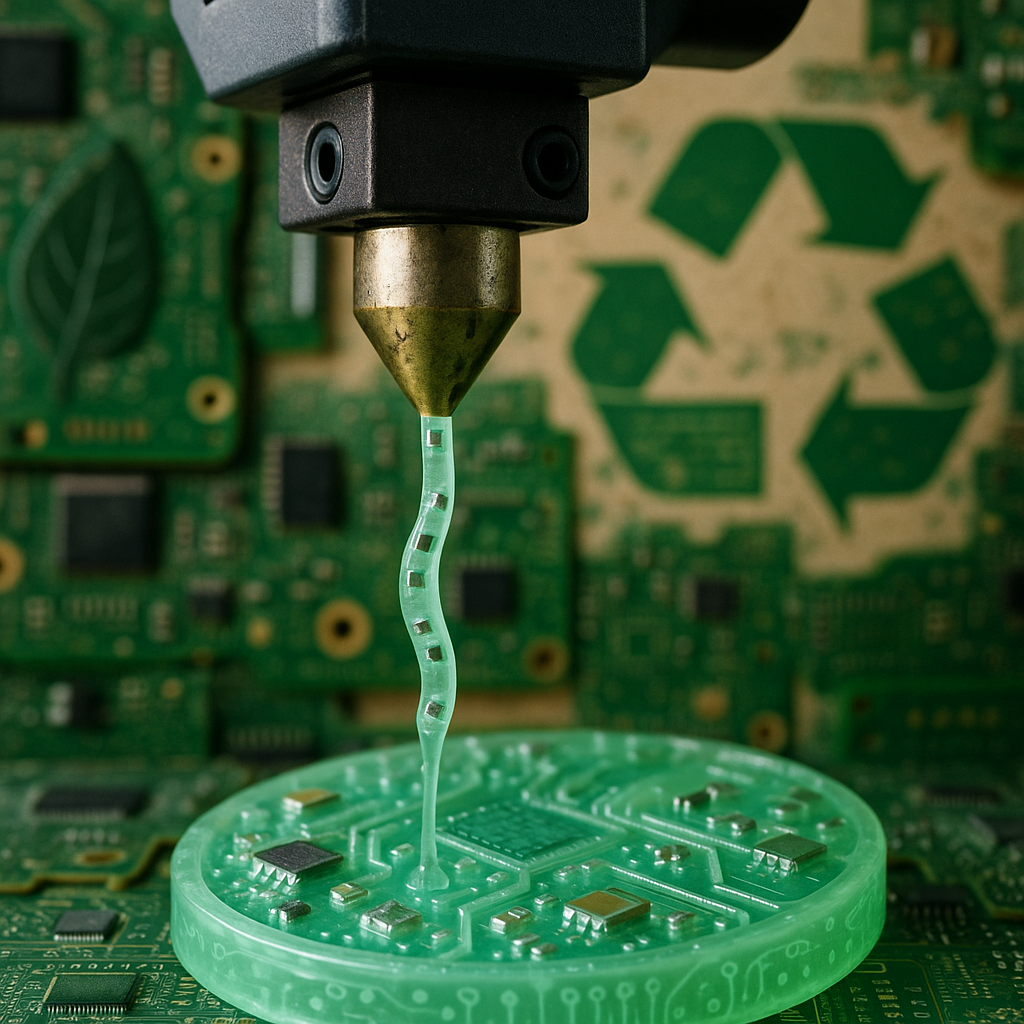
Renew IT, a company specializing in innovative recycling solutions, has developed a novel 3D printing filament derived from recycled electronic waste (e-waste). This breakthrough, reported by VoxelMatters, introduces a sustainable smart filament that integrates recycled electronic components into the material matrix, enabling potential bio-embedded and responsive functionalities.
Why It Matters
The innovation addresses two critical challenges in the 3D printing ecosystem: environmental sustainability and the advancement of smart materials. E-waste is a rapidly growing environmental problem worldwide, with millions of tons discarded annually. By converting e-waste into functional 3D printing filament, Renew IT not only diverts hazardous materials from landfills but also adds value by embedding electronic properties into the filament itself.
Smart filaments are a frontier in 3D printing, enabling printed objects to respond to environmental stimuli such as temperature, light, or electrical signals. Incorporating recycled e-waste components could accelerate the development of bio-embedded materials, which combine biological elements with electronics for applications in healthcare, wearable technology, and adaptive manufacturing.
Technical Context
While the detailed composition and manufacturing process of Renew IT’s filament remain undisclosed, the concept involves extracting usable conductive and semiconductive materials from discarded electronics and integrating them into a polymer matrix suitable for extrusion into filament form. This process requires overcoming challenges such as ensuring uniform dispersion of particles, maintaining filament flexibility and printability, and achieving consistent electrical properties.
Smart filaments currently on the market often rely on conductive polymers, carbon nanotubes, or metal nanoparticles. Renew IT’s approach of sourcing these functional elements from e-waste is novel and potentially cost-effective, but it also introduces variability and contamination risks that must be carefully managed.
The bio-embedded aspect suggests the filament could support or interact with biological components, although specifics are not yet available. This aligns with emerging trends in 3D printing where materials are designed to be biocompatible or incorporate sensors for real-time monitoring.
Near-term Prediction Model
Renew IT’s technology is likely in the pilot to early commercial stage, given the public announcement and media coverage but limited technical disclosures. Over the next 12 to 24 months, the company may focus on refining filament consistency, scaling production, and demonstrating applications in smart devices or bio-integrated products.
Market adoption will depend on factors such as filament performance compared to traditional materials, cost competitiveness, and regulatory approval for bio-related uses. The environmental benefits and innovative recycling approach provide a strong narrative that could drive interest from sustainable manufacturing sectors and research institutions.
What to Watch
- Technical validation of filament properties including mechanical strength, electrical conductivity, and printability.
- Demonstrations of smart or bio-embedded applications using the filament.
- Partnerships with 3D printer manufacturers or material distributors to broaden market access.
- Regulatory developments related to recycled electronic materials and bio-embedded devices.
- Expansion of e-waste sourcing and recycling infrastructure to support filament production scale-up.
In summary, Renew IT’s innovation exemplifies a promising convergence of sustainability and advanced material science in the 3D printing industry. While many technical and commercial details remain to be seen, the initiative could mark a significant step toward circular economy practices and the evolution of smart, bio-embedded 3D printing materials.