
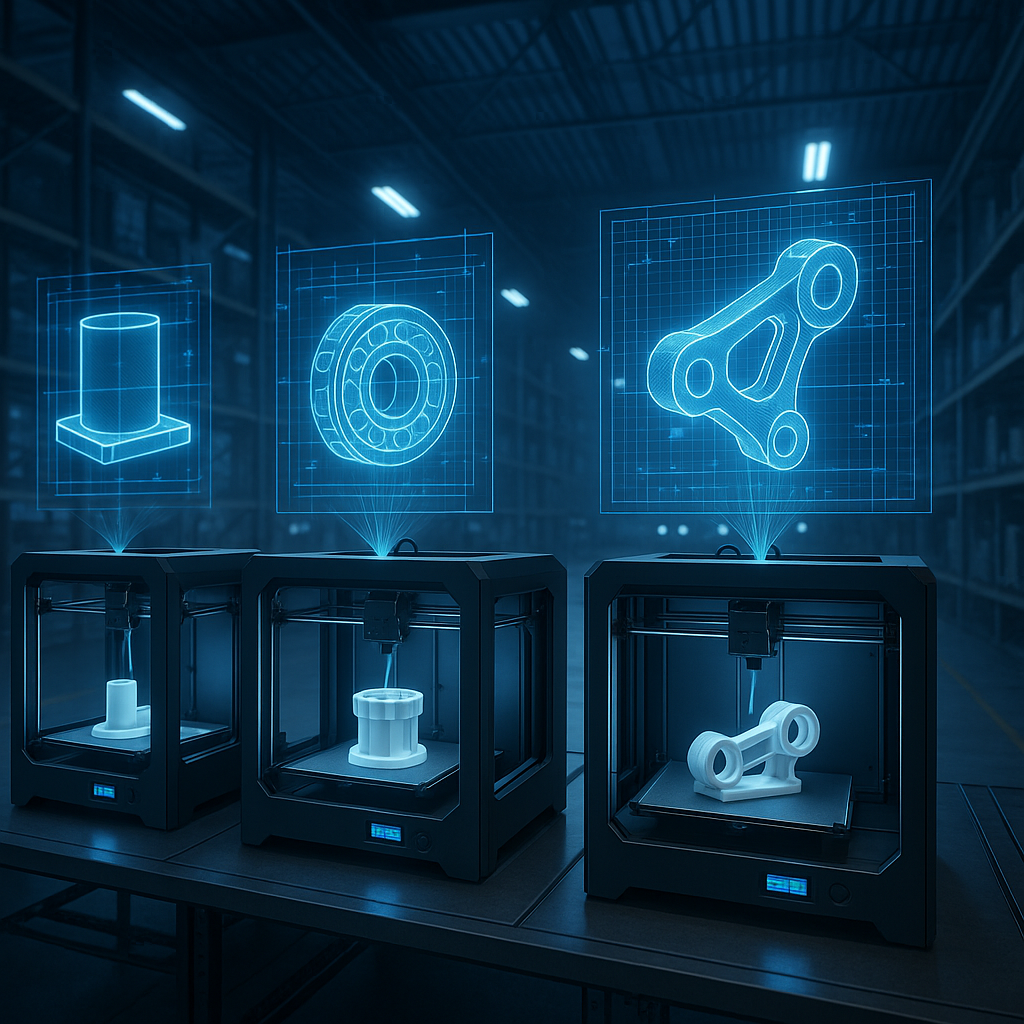
As industrial 3D printing technologies mature, the concept of digital inventory 3D printing is gaining traction as a transformative approach to on-demand manufacturing and supply chain optimization. A recent industry forecast from 3DPrint.com highlights key developments in polymer additive manufacturing and industrial production expected by 2026 that underpin this trend.
What Happened
Recent predictions for 2026 emphasize the growing role of polymer-based additive manufacturing in industrial-scale production. This growth is not just about faster or cheaper 3D printers; it signals a shift toward leveraging digital inventory systems where physical stock is replaced by digital files ready for on-demand printing. Instead of warehousing large quantities of parts, manufacturers and distributors will store digital blueprints and print parts as needed, reducing lead times and inventory costs.
Why It Matters
The transition to digital inventory 3D printing addresses persistent supply chain vulnerabilities exposed by recent global disruptions. By decentralizing production and enabling localized, on-demand manufacturing, companies can reduce dependency on complex logistics, mitigate stockouts, and respond rapidly to market changes. This agility is critical for industries ranging from aerospace and automotive to healthcare, where customized or replacement parts are often needed quickly.
Moreover, digital inventories reduce waste associated with overproduction and obsolete stock. They also open new business models centered around digital part distribution and licensing, potentially reshaping manufacturing economics.
Technical Context
Polymer additive manufacturing technologies, including fused filament fabrication (FFF), selective laser sintering (SLS), and vat photopolymerization, have advanced in material properties, speed, and reliability. Industrial-grade 3D printers now produce parts with mechanical performance approaching traditionally manufactured components, suitable for end-use applications.
Key enablers for digital inventory 3D printing include improved digital asset management platforms, secure file transmission protocols, and standardized part certification processes. However, challenges remain in ensuring consistent quality across distributed print sites and managing intellectual property rights for digital files.
Near-term Prediction Model
By 2026, we expect digital inventory 3D printing to reach a commercial maturity stage with broad adoption in select sectors. Early adopters will be industries with complex supply chains and high customization needs. The impact score is projected at 75 out of 100, reflecting significant but not yet universal transformation. Confidence in this forecast is moderate at 70 out of 100, given uncertainties in scaling quality assurance and regulatory acceptance.
What to Watch
- Development of robust digital rights management and cybersecurity measures for digital part files.
- Advancements in automated quality control and certification methods for distributed manufacturing.
- Expansion of polymer materials that meet or exceed traditional manufacturing standards.
- Emergence of new business models around digital inventory marketplaces and on-demand production services.
- Regulatory frameworks adapting to decentralized manufacturing and digital inventory concepts.
While some details remain unknown—such as the pace at which regulatory bodies will approve 3D printed parts for critical applications—the trajectory toward digital inventory 3D printing is clear. Stakeholders should prepare for a paradigm where digital blueprints replace physical warehouses, enabling a more responsive, sustainable, and resilient manufacturing ecosystem.