
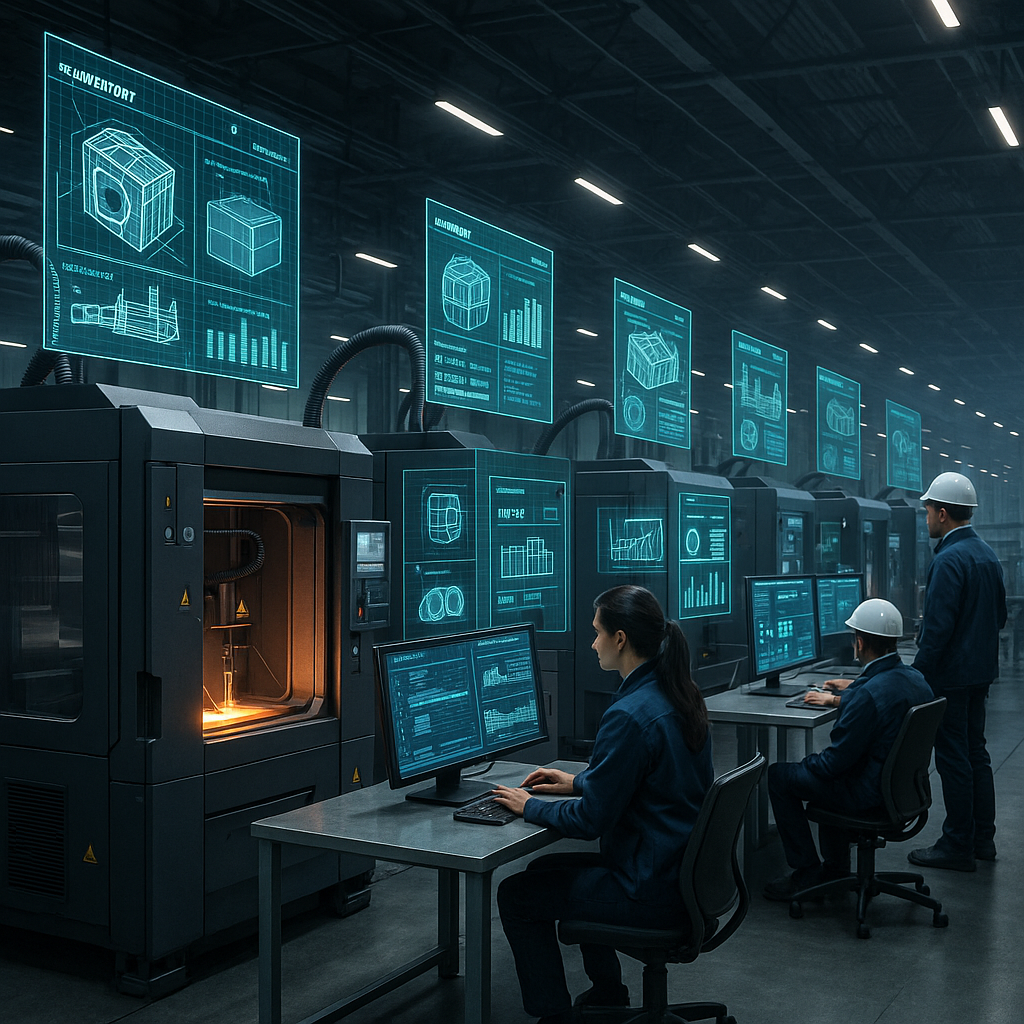
In a recent development reported by PhillyBurbs, a metal 3D printing manufacturer has expanded its technological capabilities, marking a significant milestone for advanced manufacturing. While specific details about the new technologies were not fully disclosed, this expansion is poised to strengthen the role of metal additive manufacturing in distributed manufacturing and digital inventory management.
What Happened
The company, whose name remains undisclosed in the report, has broadened its metal 3D printing technology portfolio. This expansion likely includes enhancements in printing speed, material diversity, and precision, enabling more complex and higher-quality metal parts. The news points toward a strategic move to address growing demand for localized, on-demand production solutions.
Why It Matters
This development is critical because it aligns with the rising trend of distributed manufacturing—where production is decentralized across multiple locations closer to end users. Metal 3D printing is uniquely suited to this model due to its flexibility and ability to produce complex geometries without the need for tooling. By expanding its technological reach, the manufacturer is enabling companies to reduce inventory costs, minimize supply chain disruptions, and accelerate time-to-market through digital inventory and on-demand production.
Digital inventory refers to the virtual catalog of parts and products stored as digital files rather than physical stock. When combined with advanced metal 3D printing, it allows companies to print parts only when needed, reducing warehousing expenses and obsolescence risk. This synergy could revolutionize spare parts management in sectors like aerospace, automotive, and defense, where metal components are critical.
Technical Context
Metal 3D printing technologies, such as Direct Metal Laser Sintering (DMLS) and Electron Beam Melting (EBM), have matured over the past decade but still face challenges like build speed, material properties consistency, and post-processing requirements. The reported expansion likely involves improvements in these areas, potentially integrating faster laser systems, advanced process monitoring, or new metal alloys that enhance mechanical performance.
Moreover, the integration of software platforms for digital inventory management and seamless order-to-print workflows is essential. The manufacturer’s advancements may include better digital thread integration, enabling secure, traceable, and efficient distributed manufacturing networks.
Near-term Prediction Model
In the next 12 to 24 months, we can expect this enhanced metal 3D printing capability to be piloted in key industrial sectors that require rapid, localized production of metal parts. The commercial adoption will likely focus on aerospace and defense for critical spare parts, automotive for prototyping and low-volume production, and energy sectors for customized components.
Companies adopting distributed manufacturing models will increasingly rely on digital inventory strategies supported by metal additive manufacturing. This will drive investments in digital infrastructure, cybersecurity for file transfer, and quality assurance protocols to ensure part reliability across distributed sites.
What to Watch
- Announcements of partnerships between metal 3D printing manufacturers and industrial end-users to deploy distributed manufacturing networks.
- Development of new metal alloys and process certifications that meet stringent industry standards.
- Advancements in software platforms enabling secure digital inventory management and automated order-to-print workflows.
- Regulatory developments around quality control and traceability in distributed metal additive manufacturing.
- Reports on cost-benefit analyses from early adopters demonstrating ROI of digital inventory and on-demand metal part production.
While the full scope of the manufacturer’s technological expansion remains to be detailed, this move signals a pivotal step toward mainstreaming metal 3D printing as a cornerstone of distributed manufacturing and digital inventory strategies.