
What happened
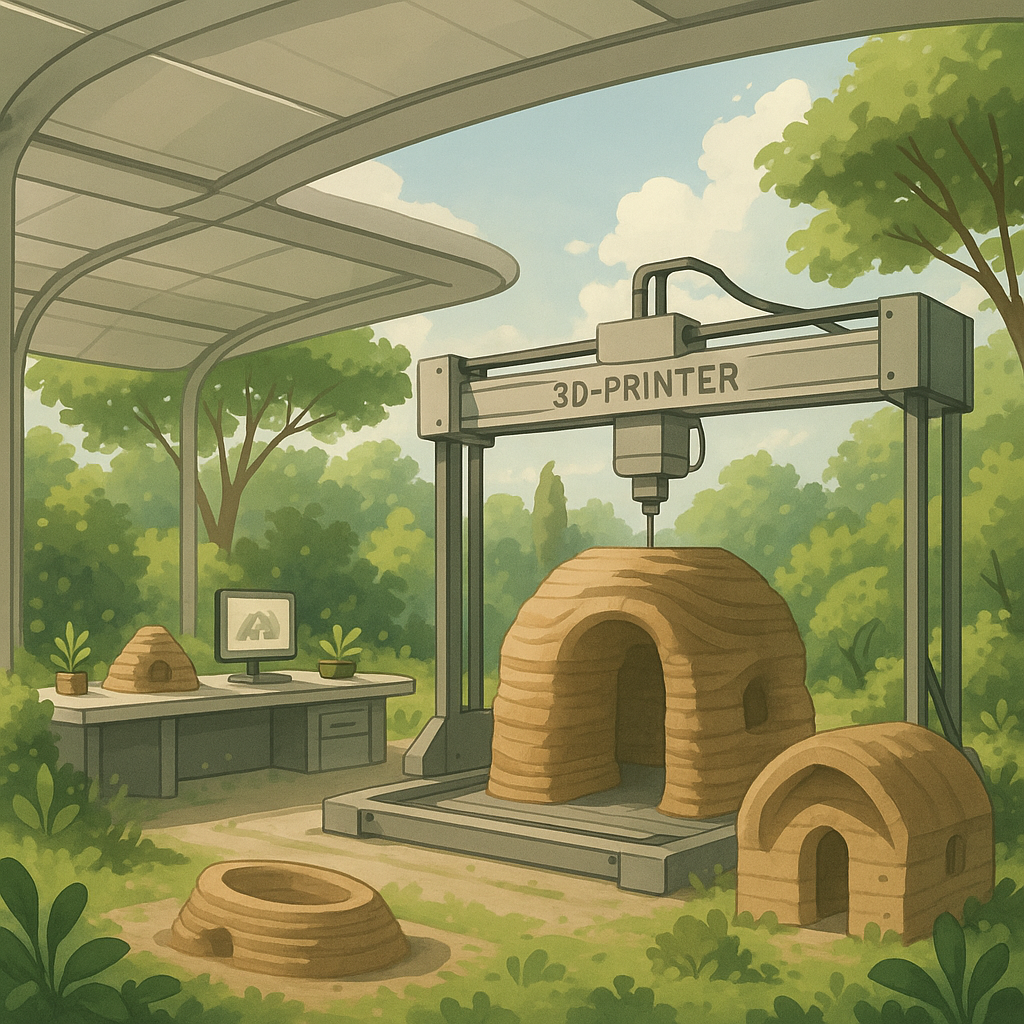
Italian 3D printing pioneer WASP has unveiled Shamballa, an open-air 3D printing laboratory dedicated to sustainable living and advanced material experimentation. This initiative represents a significant step towards integrating living materials—biological components embedded within 3D printed structures—into construction processes. The Shamballa lab aims to develop and test innovative bio-embedded materials that can adapt, self-repair, and contribute to environmental sustainability in architecture and infrastructure.
Why it matters
The Shamballa project signals an important evolution in 3D printing technology, moving beyond inert materials like plastics and concrete towards smart, living materials that interact dynamically with their environment. By embedding biological elements such as microbes, fungi, or plant matter into printed structures, WASP is exploring how buildings can become more resilient, energy-efficient, and environmentally harmonious. This approach aligns with growing global imperatives to reduce carbon footprints and resource consumption in construction.
Living materials promise self-healing capabilities, carbon sequestration, and enhanced thermal regulation, potentially transforming how we conceive of and construct buildings. WASP’s open-air lab also highlights the importance of real-world testing of these materials under natural environmental conditions, which is critical for assessing their durability and practical viability.
Technical context
Living materials in 3D printing combine biological organisms with traditional or novel substrates to create hybrid composites. These materials may include mycelium-based composites, bacterial cellulose, or engineered biofilms that can grow, repair, or respond to stimuli. WASP’s Shamballa lab likely integrates large-scale extrusion-based 3D printing with biofabrication techniques, though specific technical details remain undisclosed.
Open-air 3D printing introduces challenges such as environmental variability, contamination risks, and material stability. However, it also enables the cultivation of living components in situ, potentially reducing transportation and processing energy. WASP’s expertise in clay and earth-based printing suggests that Shamballa may focus on combining natural mineral substrates with living organisms to create sustainable building blocks.
While the exact biological systems and printing parameters remain unknown, this initiative contributes to the broader field of biohybrid manufacturing, which merges additive manufacturing with synthetic biology and materials science.
Near-term prediction model
Given that Shamballa is newly unveiled and still in an exploratory phase, the technology is currently at the pilot stage. Over the next 12 to 24 months, we can expect WASP to develop prototype structures demonstrating the feasibility of living materials in open-air conditions. Key milestones will include validating material performance, environmental resilience, and scalability.
The impact of this technology is potentially high (impact score ~75), given its alignment with sustainability trends and smart material innovation. Confidence remains moderate (~60) due to technical uncertainties and the nascent nature of living material integration in construction-scale 3D printing.
What to watch
- Material formulations: Advances in bio-composite recipes combining earth-based substrates with living organisms.
- Environmental performance data: Real-world durability, self-healing capabilities, and carbon sequestration metrics from Shamballa prototypes.
- Scaling strategies: Methods to transition from experimental prints to functional, code-compliant building components.
- Regulatory acceptance: Building standards and certifications adapting to bio-embedded construction materials.
- Cross-disciplinary collaborations: Partnerships with microbiologists, synthetic biologists, and architects to refine living material applications.
In summary, WASP’s Shamballa open-air 3D printing lab is pioneering the integration of living materials into sustainable construction, potentially redefining how buildings interact with their environment. Continued observation of this initiative will provide valuable insights into the future of smart, bio-embedded 3D printing materials.