
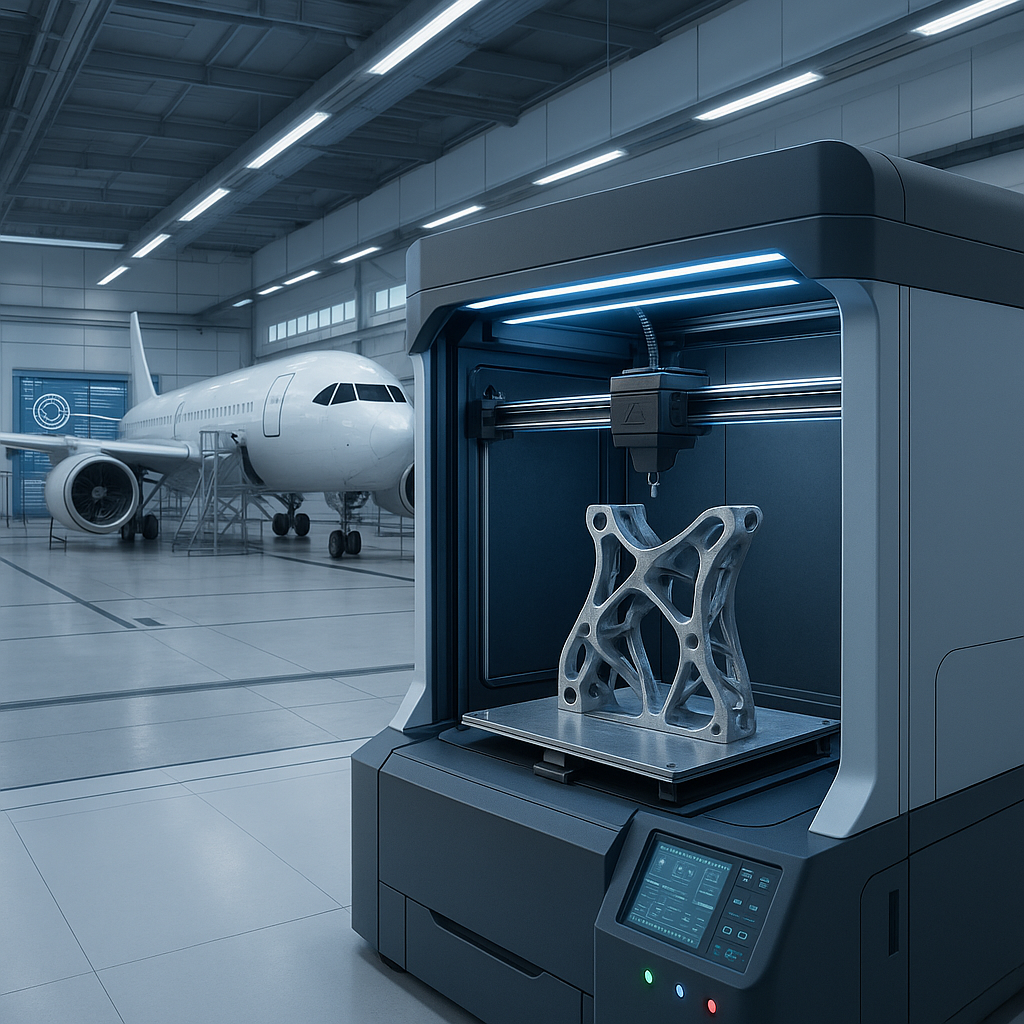
In a recent interview published by 3D Printing Industry, Materialise’s pioneering work in aerospace 3D printing applications was highlighted as a vital yet often overlooked force driving innovation. This development is particularly significant in the context of digital inventory and on-demand spares, where 3D printing is reshaping how aerospace companies approach maintenance, repair, and overhaul (MRO) logistics.
What Happened
Materialise, a leader in additive manufacturing software and services, has been advancing the use of 3D printing for aerospace parts that are traditionally difficult to source or keep in stock. The interview sheds light on how the company’s technology enables the production of critical spare parts on-demand, eliminating the need for large physical inventories and reducing aircraft downtime. While the article does not disclose exhaustive technical specifics or proprietary processes, it underscores that the applications extend beyond prototyping to certified production parts ready for operational use.
Why It Matters
The aerospace industry faces persistent challenges in managing spare parts inventory due to long supply chains, part obsolescence, and the high costs of warehousing. On-demand manufacturing powered by 3D printing offers a strategic solution by digitizing inventory—storing digital part files instead of physical stock—and printing parts as needed. This approach can dramatically reduce lead times for component replacement, improve aircraft availability, and lower overall maintenance costs.
Materialise’s work exemplifies how additive manufacturing can serve as a backbone for this transformation. By providing validated digital workflows and quality assurance protocols, they help ensure that printed parts meet stringent aerospace standards, which is crucial for safety and regulatory compliance. The ability to produce spares rapidly also enhances resilience against supply chain disruptions, a lesson underscored by recent global events.
Technical Context
While the interview does not delve deeply into Materialise’s proprietary software or hardware stack, it is known that the company integrates advanced build preparation software, topology optimization, and process simulation tools to optimize parts for additive manufacturing. Aerospace parts produced on-demand typically involve metal 3D printing technologies such as powder bed fusion or directed energy deposition, which can meet the mechanical and thermal requirements of flight-critical components.
Materialise’s solutions likely include rigorous quality control measures, including in-situ monitoring and post-build inspection, to ensure part integrity. The digital inventory model relies on secure, version-controlled digital part libraries, enabling traceability and compliance with aerospace certification standards. However, the exact certification pathways and regulatory approvals achieved by these on-demand spares remain unspecified in the source.
Near-Term Prediction Model
The integration of 3D printed on-demand spares in aerospace is currently transitioning from pilot projects to commercial adoption. Given the complexity of aerospace certification and the critical nature of parts, widespread implementation will be gradual but steady. Within the next 12 to 24 months, we can expect increased deployment of digital inventory systems supported by Materialise and similar providers, especially for legacy or hard-to-source components.
Investment in digital infrastructure and partnerships between OEMs, MRO providers, and additive manufacturing specialists will be key drivers. The impact on supply chain agility and cost efficiency is poised to be significant, though full-scale transformation will require overcoming regulatory hurdles and scaling production capabilities.
What to Watch
- Updates on aerospace certification approvals for 3D printed on-demand spares, which will validate broader adoption.
- Expansion of digital inventory platforms integrating blockchain or other secure technologies for enhanced part traceability.
- Collaborations between Materialise and major aerospace OEMs or MRO firms to scale on-demand manufacturing services.
- Technological advancements in metal 3D printing that improve build speed, material properties, and cost-effectiveness.
- Case studies demonstrating reduced aircraft downtime and cost savings attributable to on-demand spare parts.
In conclusion, Materialise’s role in advancing 3D printing for aerospace on-demand spares represents a crucial frontier in digital inventory management. While some technical and regulatory details remain undisclosed, the trajectory is clear: additive manufacturing is becoming an indispensable tool for modernizing aerospace supply chains and maintenance strategies.