
What Happened
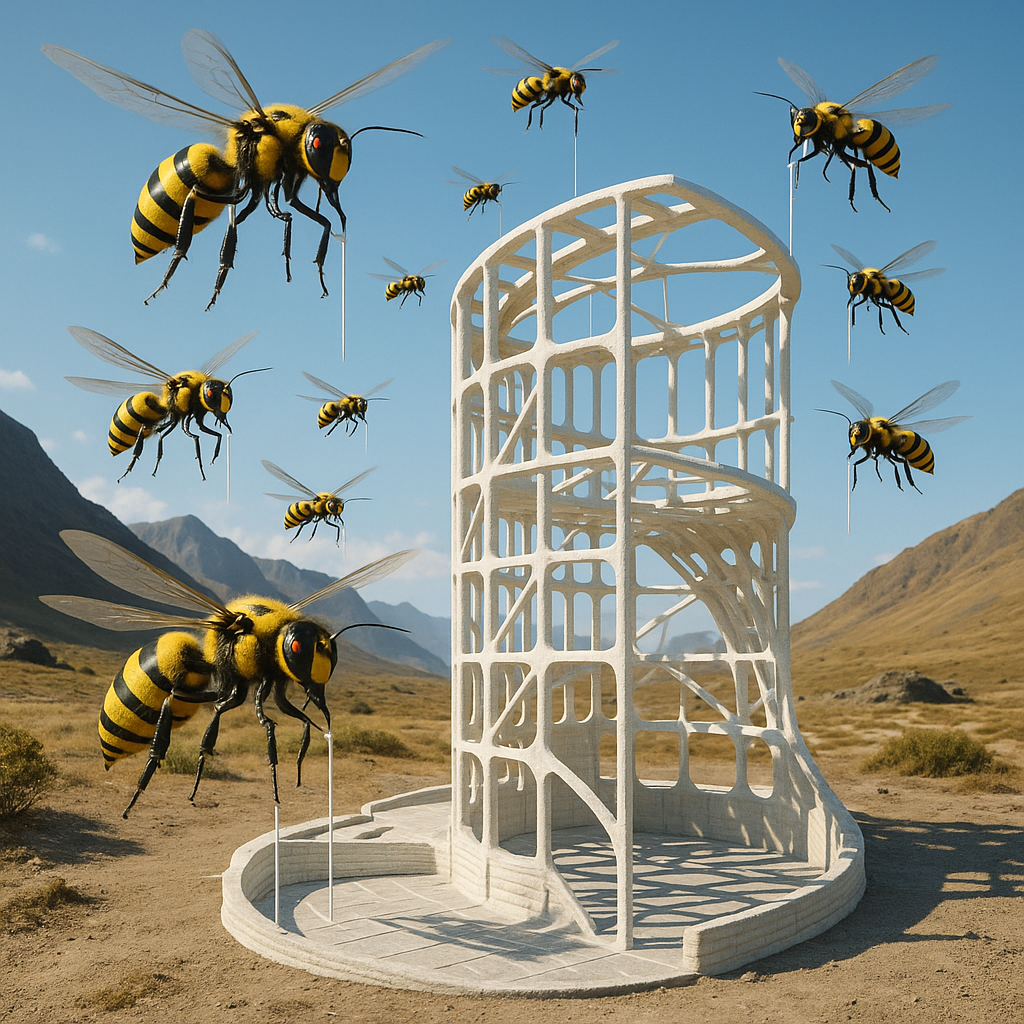
A recent development in the field of additive manufacturing involves a swarm of wasp-like 3D printing drones designed to collaboratively build structures in isolated areas. This innovation was reported by 3D Printing Industry. These drones mimic the behavior of wasps, working in coordinated swarms to fabricate structures layer by layer, potentially overcoming traditional barriers posed by remote or difficult-to-access construction sites.
Why It Matters
The emergence of swarm 3D printing drones represents a paradigm shift in construction and manufacturing, particularly for remote or disaster-stricken regions where conventional building equipment cannot easily operate. This technology could enable rapid, autonomous assembly of infrastructure without the need for human presence on site, reducing risk and cost. Moreover, it aligns with broader trends toward automation and distributed manufacturing, potentially enabling scalable, on-demand construction that adapts to environmental constraints.
Technical Context
Swarm 3D printing leverages multiple drones equipped with additive manufacturing capabilities, coordinating their movements and print tasks to collectively build larger or more complex structures than a single device could manage. The wasp-like design likely refers to the drones’ agility, precision, and ability to work in unison, reminiscent of social insects that build nests collaboratively.
Key technical challenges include real-time coordination algorithms to avoid collisions and optimize print sequencing, material handling and deposition methods suitable for aerial platforms, and power management for sustained operation. The drones must also operate reliably in variable environmental conditions typical of isolated areas.
Currently, detailed technical specifications such as the printing materials used, drone endurance, and the scale of structures achievable remain unspecified in the source. The integration of sensors and autonomous navigation systems will be essential for precise construction and adaptation to terrain.
Near-term Prediction Model
This technology is currently in the research and development phase, with potential pilot projects expected within the next 12 to 24 months. Initial applications may focus on small-scale infrastructure such as emergency shelters, communication towers, or environmental monitoring stations.
As the drones’ coordination algorithms and material science mature, commercial viability could be reached in approximately 3 to 5 years, especially if partnerships with construction firms and government agencies accelerate deployment.
Impact Score: 75/100 — The ability to autonomously build in remote areas could significantly reduce construction costs and time, while opening new markets.
Confidence Level: 65/100 — While promising, the technology faces notable engineering and regulatory challenges.
What to Watch
- Advancements in autonomous swarm coordination and collision avoidance software.
- Development of lightweight, durable printing materials compatible with drone payload capacities.
- Field trials demonstrating real-world construction capabilities and environmental resilience.
- Regulatory frameworks addressing drone operations in construction zones and remote areas.
- Partnerships between drone manufacturers, construction companies, and government agencies for pilot deployments.
In conclusion, swarm 3D printing drones represent an exciting frontier in additive manufacturing with the potential to transform how and where we build. Continued innovation and validation in the coming years will determine their practical impact on the construction industry and remote infrastructure development.