
What Happened
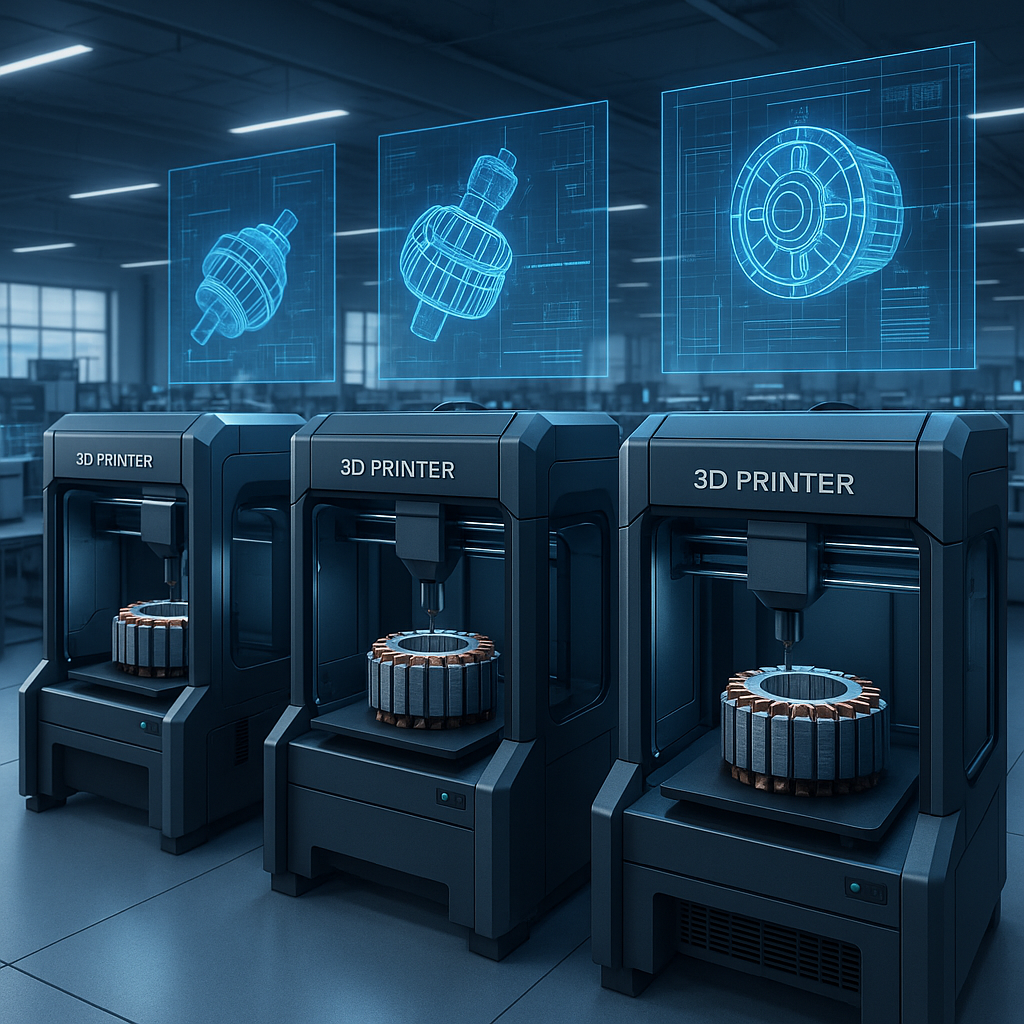
The National Renewable Energy Laboratory (NREL) recently unveiled advancements in the manufacturing and additive design of electric machines using 3D printing technologies. This development signifies a strategic move towards leveraging additive manufacturing to produce complex electric machine components, potentially transforming traditional supply chains and manufacturing paradigms.
Why It Matters
This breakthrough is significant for the broader adoption of distributed manufacturing and digital inventory models. Electric machines are critical components in renewable energy systems, electric vehicles, and industrial applications. Traditional manufacturing methods often involve long lead times, centralized production facilities, and complex supply chains prone to disruption. By integrating 3D printing into electric machine production, NREL is pioneering a path toward localized, on-demand manufacturing which can reduce inventory costs, improve customization, and enhance responsiveness to market needs.
Distributed manufacturing enabled by additive processes could decentralize production, allowing manufacturers to store digital inventories rather than physical stockpiles. This shift can lead to greater resilience in supply chains, especially for specialized or low-volume parts, and support sustainability goals by minimizing waste and transportation emissions.
Technical Context
Electric machines, such as motors and generators, involve intricate geometries and require precise material properties to achieve optimal performance. Traditional manufacturing often relies on machining, casting, and winding processes that can limit design flexibility. Additive manufacturing, particularly advanced 3D printing, enables the fabrication of complex internal structures and integrated components that were previously impossible or cost-prohibitive.
NREL’s work focuses on both the design optimization and the manufacturing of these machines via additive techniques. This includes experimenting with novel materials suitable for electric machine components and refining printing processes to meet stringent performance and durability requirements. Although specific technical details about the materials and printing methods used are not fully disclosed, the initiative represents a convergence of materials science, electrical engineering, and advanced manufacturing.
Near-term Prediction Model
In the next 12 to 24 months, this technology is expected to transition from pilot phases to early commercial applications, particularly in sectors where customization and rapid prototyping are critical. The impact score is moderate to high, given the potential to disrupt traditional manufacturing and inventory models, but widespread adoption will depend on overcoming challenges related to material performance, certification, and scaling production.
Manufacturers and OEMs in renewable energy and electric mobility sectors are likely to be the first adopters, leveraging 3D printed electric machine components to accelerate product development cycles and reduce inventory burdens. Digital inventory strategies will gain traction as companies integrate distributed manufacturing nodes capable of producing parts on demand, reducing dependence on centralized warehouses.
What to Watch
- Advancements in printable materials tailored for electric machine performance and durability.
- Development of standards and certification processes for 3D printed electric machine components.
- Integration of digital inventory platforms with distributed manufacturing networks enabling on-demand production.
- Collaborations between research institutions, manufacturers, and supply chain stakeholders to scale additive manufacturing capabilities.
- Economic analyses comparing lifecycle costs of traditional vs. 3D printed electric machines.
While specific production volumes and cost metrics remain undisclosed, the trajectory set by NREL suggests a growing role for additive manufacturing in the future of electric machine fabrication and digital inventory management.