
What Happened
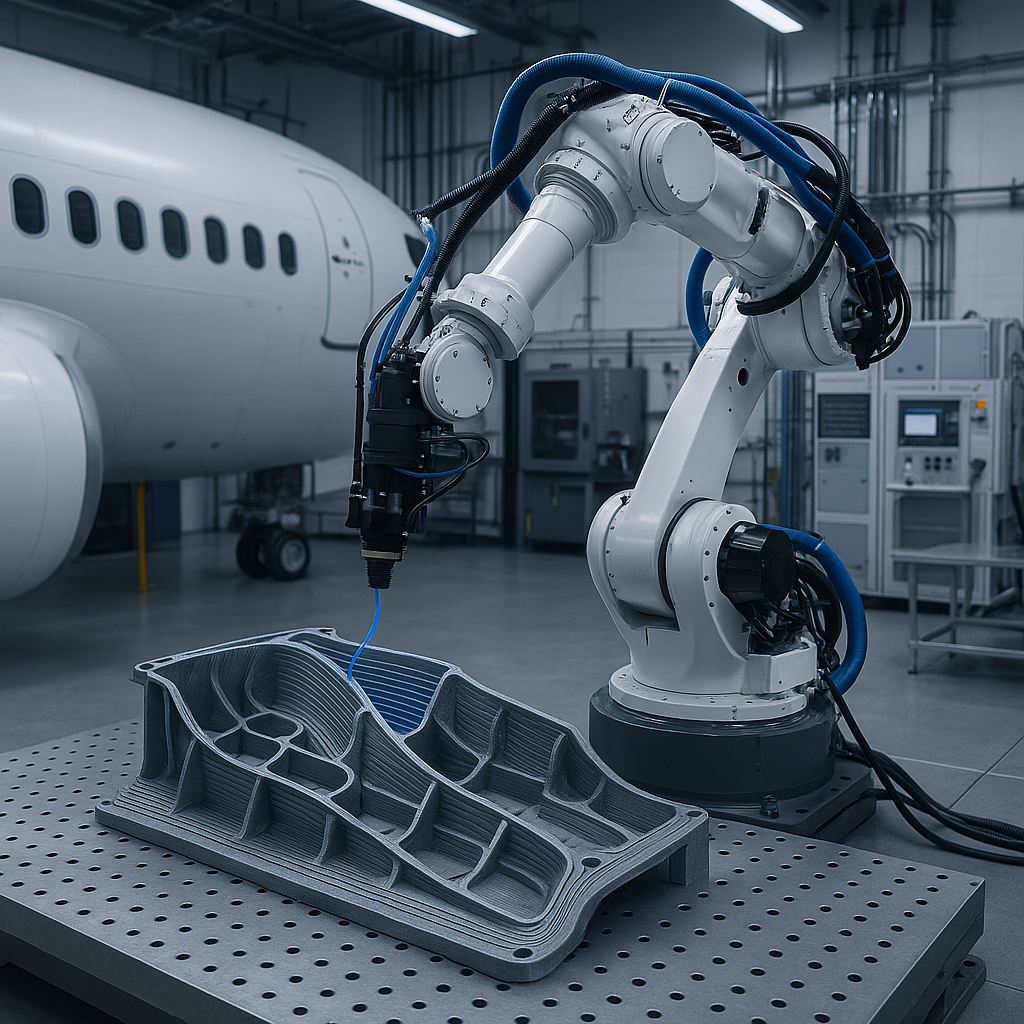
The Robins Air Force Base (AFB) Additive Manufacturing Lab has recently made significant strides in integrating robotic arm 3D printing technologies to boost Air Force readiness. According to a recent report from wpafb.af.mil, this lab is deploying advanced robotic arm 3D printing systems to produce critical components with enhanced geometrical complexity and reduced lead times.
Why It Matters
The adoption of robotic arm 3D printing represents a pivotal shift from traditional planar additive manufacturing methods. By enabling non-planar, multi-axis printing, the Air Force can manufacture parts with superior mechanical properties, reduced support material, and improved design freedom. This capability is crucial for rapidly producing mission-critical aerospace components that meet stringent performance and durability standards, directly impacting operational readiness and maintenance efficiency.
Technical Context
Robotic arm 3D printing uses articulated robotic manipulators to deposit material along complex, curved toolpaths rather than the conventional layer-by-layer planar approach. This multi-axis freedom allows the print head to maintain optimal orientation relative to the surface, improving surface finish and mechanical anisotropy. The technology supports diverse materials, including high-performance polymers and metal powders, often integrated with directed energy sources like lasers for melting or curing.
At Robins AFB, the lab’s setup likely includes six-axis robotic arms equipped with extrusion or powder deposition heads, enabling the fabrication of aerospace-grade components with intricate geometries such as internal channels, overhangs, and lattice structures. However, specific technical details about the materials used, print speeds, and post-processing workflows remain undisclosed in the public report.
Near-term Prediction Model
Within the next 12 to 18 months, it is expected that Robins AFB will transition from pilot-scale demonstrations to more routine operational use of robotic arm 3D printing for select parts. This progression will be facilitated by ongoing optimization of print parameters, integration with digital twin simulations, and qualification of printed components under military standards. The technology maturity is currently at the pilot stage, with high confidence in its potential to reduce part lead times and improve part performance.
Nevertheless, challenges such as process repeatability, certification of printed parts for flight, and supply chain integration remain. Overcoming these will be critical to scaling the technology across broader Air Force applications.
What to Watch
- Advancements in multi-material robotic arm printing at Robins AFB to enable functionally graded or composite aerospace parts.
- Development of automated in-situ monitoring and feedback controls to enhance print quality and reduce defects.
- Collaborations between the Air Force and industry leaders to standardize non-planar additive manufacturing processes.
- Regulatory and certification milestones for flight-critical components produced via robotic arm 3D printing.
- Expansion of robotic arm 3D printing capabilities beyond aerospace to other defense sectors requiring complex, rapid manufacturing.
In summary, Robins AFB’s investment in robotic arm 3D printing marks a forward-looking embrace of non-planar, multi-axis additive manufacturing, poised to transform aerospace part production and maintenance. Continued innovation and validation will be key to unlocking its full strategic value for the Air Force.