
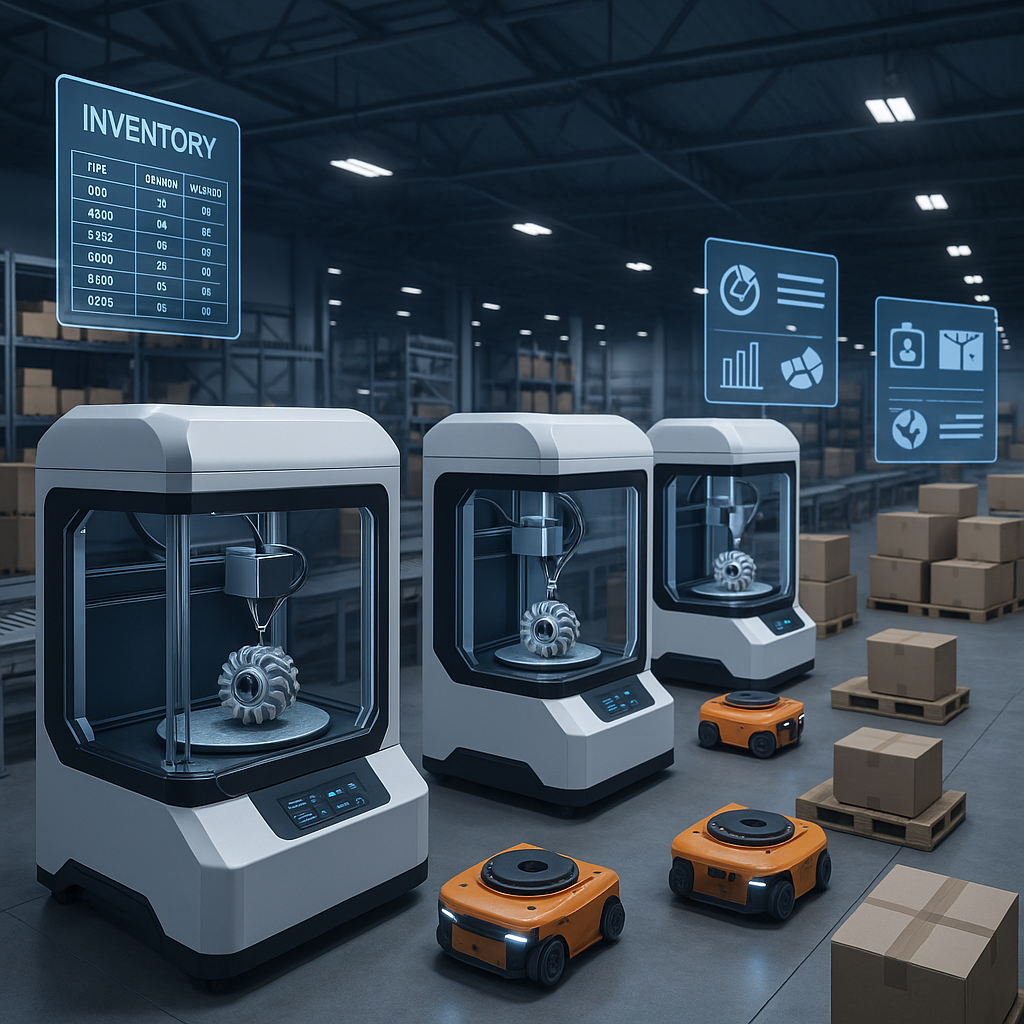
Recent insights from GetTransport.com highlight 3D printing as a transformative yet underappreciated technology for supply chain innovation. A particular focus is emerging around the concept of on-demand spares—producing replacement parts exactly when and where they are needed, rather than relying on large inventories or long lead times. This article synthesizes the implications of this trend, examining what has happened, why it matters, the technical landscape, near-term outlooks, and key factors to watch.
What Happened
3D printing technologies have matured to the point where they are increasingly integrated into supply chain processes, especially for spare parts production. Traditional supply chains often depend on extensive warehousing of spare components to avoid downtime, which leads to high inventory costs and inefficiencies. The recent coverage by GetTransport.com draws attention to how additive manufacturing enables companies to shift from stockpiling parts to producing them on demand, tailored to specific needs and locations.
While the article does not provide exhaustive data or case studies, it identifies 3D printing as a “hidden gem” in supply chain transformation—implying that the technology’s potential remains underleveraged. This suggests a growing awareness but still a nascent stage of adoption for on-demand spares within broader logistics and manufacturing ecosystems.
Why It Matters
The ability to manufacture spares on demand addresses several critical supply chain challenges. First, it drastically reduces the need for physical inventory, freeing up capital and warehouse space. Second, it shortens lead times for replacement parts, minimizing operational downtime and associated costs. Third, it enhances supply chain resilience by decentralizing production—parts can be printed closer to the point of use, reducing dependence on complex global shipping networks vulnerable to disruption.
Moreover, on-demand spares can support sustainability goals by lowering waste from overproduction and obsolescence. This capability is particularly crucial for industries with long product lifecycles or those operating in remote locations where traditional logistics are costly or unreliable.
Technical Context
On-demand spare parts production leverages various 3D printing technologies, including selective laser sintering (SLS), fused deposition modeling (FDM), and metal additive manufacturing methods. The choice depends on the material properties required, complexity of the part, and production volume.
Digital inventory management systems complement 3D printing by storing digital part files securely and enabling rapid retrieval and printing. Integration with enterprise resource planning (ERP) and supply chain management software is essential to coordinate demand signals with production capabilities.
Challenges remain in standardizing digital part files, ensuring quality and certification of printed parts, and scaling production speed to meet urgent demands. Intellectual property concerns and cybersecurity of digital inventories also require robust solutions.
Near-Term Prediction Model
Currently, on-demand spares production via 3D printing is transitioning from pilot implementations to early commercial deployments. Over the next 12 to 24 months, we expect:
- Increased adoption in sectors with high-value, low-volume spare parts such as aerospace, defense, and industrial equipment.
- Development of standardized digital inventories and certification protocols to facilitate regulatory acceptance.
- Improved integration of 3D printing with supply chain IT systems for real-time responsiveness.
- Expansion of localized production hubs to reduce shipping times and costs.
However, broad industry-wide adoption may take longer due to technical, regulatory, and organizational hurdles.
What to Watch
- Advancements in 3D printing materials and processes that enhance durability and performance of spare parts.
- Regulatory developments around certification and safety standards for additive manufacturing in critical industries.
- Emergence of secure, interoperable digital inventory platforms enabling widespread sharing and protection of part designs.
- Case studies and pilot projects demonstrating cost savings and operational benefits from on-demand spares.
- Collaborations between logistics providers, manufacturers, and technology vendors to build integrated on-demand supply chain networks.
In conclusion, the integration of 3D printing for on-demand spares represents a promising frontier in supply chain transformation. While still emerging, this approach offers significant potential to increase agility, reduce costs, and enhance resilience. Continued innovation, standardization, and ecosystem collaboration will be key to unlocking its full impact.