
What Happened
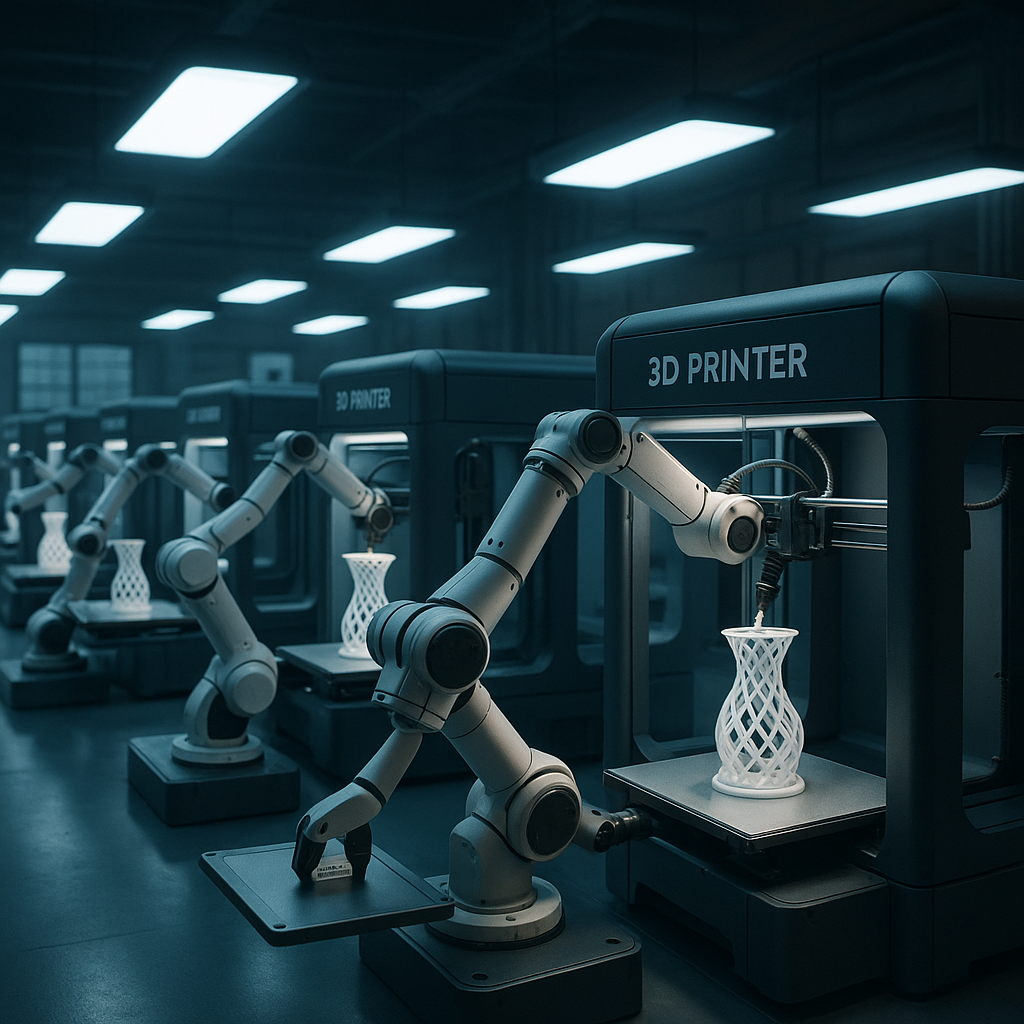
A recent innovation highlighted by All3DP introduces a Kickstarter-backed kit designed to automate 3D printers by enabling continuous printing through automated plate swapping. This innovation aims to eliminate the need for manual intervention, such as midnight plate swaps, thereby facilitating true 24/7 operation of individual printers or entire print farms.
Why It Matters
Print farm automation has long been a bottleneck for scaling 3D printing operations, especially for small to medium-sized businesses and advanced hobbyists. Manual plate swapping interrupts production and requires human presence, limiting throughput and increasing labor costs. This automated kit addresses a critical pain point by enabling printers to unload completed prints and prepare for the next job autonomously. Beyond convenience, this capability can significantly increase printer utilization rates, improve operational efficiency, and reduce downtime.
Moreover, this development aligns with the broader trend of swarm and collaborative printing, where multiple printers work in tandem with minimal human oversight. Automation at the printer level complements software-driven print farm management systems, creating a more cohesive and scalable ecosystem.
Technical Context
The kit appears to retrofit existing 3D printers with hardware and software components that facilitate plate removal and replacement without manual assistance. While detailed technical specifications are not fully disclosed, the system likely includes a mechanical arm or automated mechanism capable of detaching the build plate with the finished print, placing it in a designated area, and positioning a new build surface for the next print job.
Integration with printer firmware and print farm management software is essential to coordinate these operations seamlessly. The kit’s Kickstarter nature suggests it targets desktop FDM printers popular among enthusiasts and small businesses, but the underlying principles could extend to industrial machines.
Challenges in this domain include ensuring precise alignment of build plates after swaps, preventing print failures due to mechanical errors, and maintaining printer calibration over extended automated cycles. The kit’s success will depend on overcoming these technical hurdles while remaining cost-effective and easy to install.
Near-term Prediction Model
In the next 12 to 18 months, automated plate swapping kits like this Kickstarter offering are expected to move from pilot projects to early commercial adoption. Early adopters will likely be small print farms and advanced hobbyists seeking to maximize uptime without investing in full-scale industrial automation systems.
As these kits prove their reliability and ease of use, we anticipate incremental improvements in mechanical design and software integration, potentially expanding compatibility to a broader range of 3D printers. This will drive a gradual shift toward more autonomous print farms, where human operators manage multiple printers remotely rather than performing manual tasks.
However, widespread adoption in large-scale industrial environments may take longer, as such settings often require more robust, integrated automation solutions tailored to high-volume production.
What to Watch
- Technical validation and user feedback: Monitor reviews and reports from Kickstarter backers and early users to assess reliability, ease of installation, and print quality impacts.
- Integration with print farm management software: Observe partnerships or software updates that enable seamless coordination between automated plate swapping and job scheduling platforms.
- Expansion of supported printer models: Track announcements regarding compatibility with a wider range of 3D printers beyond the initial target models.
- Emergence of competing solutions: Watch for other startups or established manufacturers entering the automated plate swapping space, potentially driving innovation and price competition.
- Regulatory and safety considerations: As automation increases, ensure compliance with safety standards to prevent damage or injury during unattended operation.
In summary, this automated plate swapping kit represents a significant step forward in print farm automation, bridging the gap between manual operation and fully autonomous 3D printing ecosystems. While still in early commercial stages, it exemplifies the growing momentum behind swarm and collaborative printing technologies that promise to reshape manufacturing workflows.